 admin
admin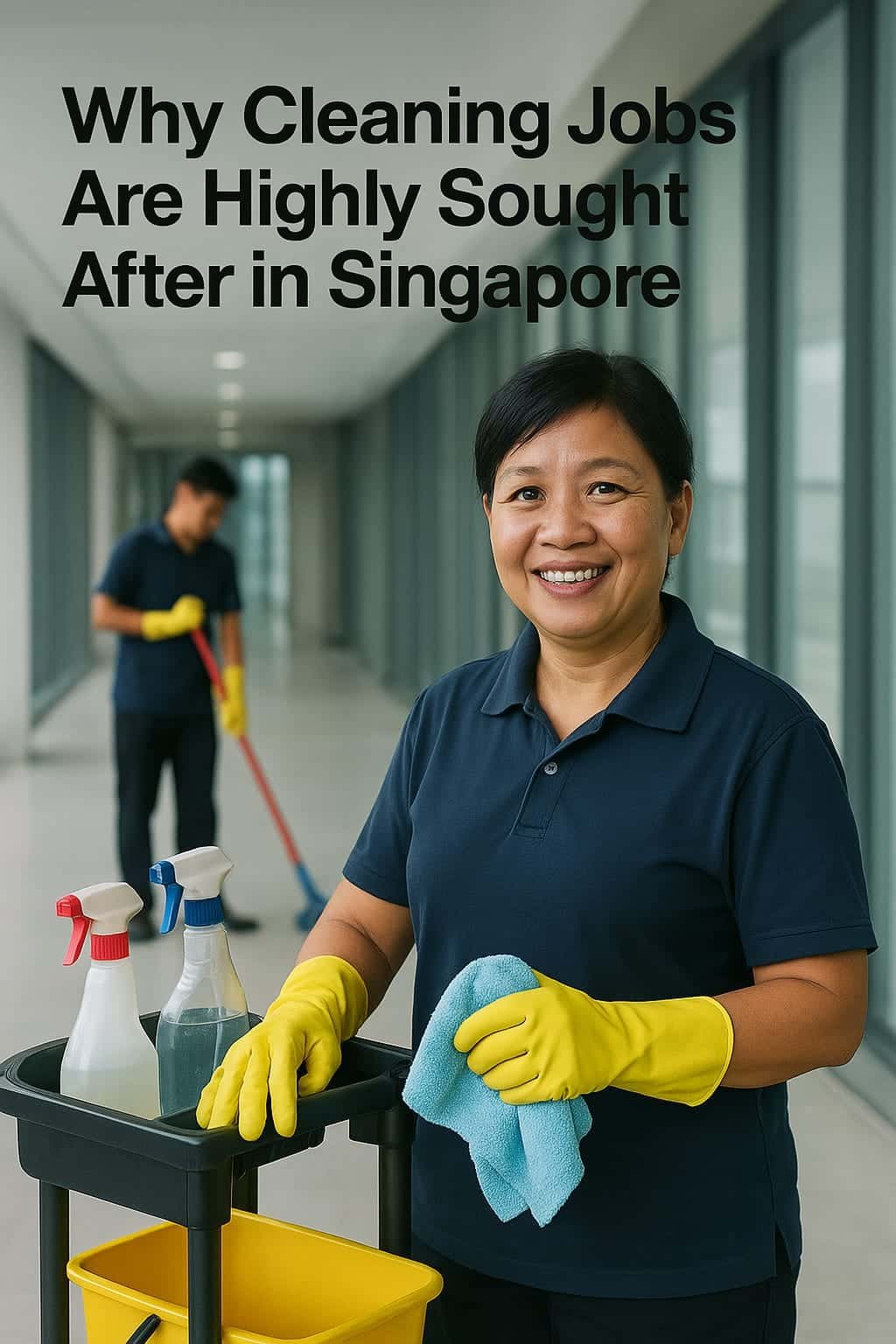
Introduction
In the bustling city-state of Singapore, known for its shimmering skyline, world-class infrastructure, and spotless streets, there lies an often-overlooked workforce that makes it all possible: the cleaners. From the early hours of dawn to late into the night, cleaners ensure that shopping malls gleam, public housing estates remain litter-free, and office buildings maintain a professional shine. While at first glance, one might assume that such jobs would be hard to fill, the opposite is true. Cleaning jobs in Singapore consistently attract applicants, both local and foreign. But why is this the case?
This article takes a deep dive into the human side of the cleaning profession in Singapore. By exploring social, economic, and cultural dimensions, as well as sharing personal stories, we will uncover the reasons why cleaning jobs continue to be in high demand in this prosperous nation.
1. Singapore’s Culture of Cleanliness
Singapore is often celebrated as one of the cleanest cities in the world. This reputation did not happen by chance. Since independence in 1965, the government has worked hard to instill a strong culture of hygiene and order. National campaigns such as the “Keep Singapore Clean” movement emphasized that a clean environment is not only a matter of aesthetics but also of public health and civic responsibility.
This national emphasis naturally created a high demand for cleaning professionals. Unlike in many other countries, cleaners in Singapore are seen as essential workers who help maintain a core value of society: cleanliness. The social respect for hygiene means there will always be a role for those willing to take on this profession.
2. Economic Realities and Steady Employment
For many workers, both local and migrant, cleaning jobs are attractive because of their reliability. Singapore has a high cost of living, and finding stable work can be challenging for those with limited qualifications. Cleaning jobs offer:
Regular income: While salaries are modest, they are consistent and dependable.
Job security: The demand for cleaners rarely decreases, even during economic downturns.
Flexible opportunities: Many positions are available in part-time or shift-based formats, making them suitable for parents, elderly workers, or those balancing multiple responsibilities.
For older Singaporeans who may have retired from other careers but still wish to remain active, cleaning jobs provide a way to earn supplemental income while staying engaged with the community.
3. Migrant Workers and the Search for Opportunity
A significant portion of Singapore’s cleaning workforce is made up of migrant workers, particularly from countries such as Malaysia, Bangladesh, India, and China. For many of these workers, cleaning jobs offer a pathway to financial stability and an opportunity to support their families back home.
For instance, a worker from Bangladesh might earn four to five times more in Singapore than they would in their home country, even in a modest cleaning position. These remittances contribute not only to individual households but also to the economies of their home countries.
The resilience and sacrifices of migrant cleaners highlight a deeply human side to the profession. Behind every polished floor and gleaming window lies a story of courage, hope, and the desire for a better life.
4. Government Policies and the Progressive Wage Model
In recent years, the Singapore government has introduced policies to uplift the cleaning profession. One of the most impactful initiatives is the Progressive Wage Model (PWM), which ensures that cleaners receive salary increases as they gain more skills and experience.
This approach not only raises incomes but also provides career progression. A cleaner may start with basic tasks such as sweeping, but with training and certifications, they can move up to supervisory roles or specialize in areas such as disinfection services.
These structured improvements make cleaning jobs more attractive, especially to younger workers who may otherwise overlook them.
5. Flexibility and Accessibility
Another reason why cleaning jobs are so popular is their accessibility. Unlike many professions that require advanced degrees or specialized training, most cleaning jobs in Singapore only require basic education. Employers often provide training on the job, making the work accessible to individuals from a wide range of backgrounds.
The flexibility of shifts is another draw. Some cleaners work early mornings or late evenings, leaving the rest of the day free for other commitments. Others choose part-time arrangements to balance family responsibilities. This adaptability makes the profession appealing to retirees, stay-at-home parents, and students looking for extra income.
6. Dignity in Essential Work
The COVID-19 pandemic shed new light on the importance of cleaners. As frontline workers, cleaners played a critical role in disinfecting public spaces, ensuring safety, and preventing the spread of the virus. Public appreciation grew, and the government recognized cleaners with higher pay and additional support.
This shift in perception elevated the dignity of cleaning work. For many, joining the profession is now seen not just as a job but as a way to contribute meaningfully to the nation’s well-being.
7. Human Stories: Voices from the Ground
To truly understand why cleaning jobs attract so many, one must listen to the voices of cleaners themselves.
Mr. Lim, 67, Retiree: After retiring from his engineering job, Mr. Lim chose part-time cleaning work at a local shopping mall. “It keeps me active,” he says. “I don’t want to sit at home all day. Here, I meet people, I move around, and I feel useful.”
Aisha, 34, Migrant Worker from Malaysia: Aisha works as a cleaner at an office building. “The hours suit me because I can pick up my children from school,” she explains. “The pay helps with our family expenses. It may not be glamorous, but it is honest work, and I am proud of it.”
Rahman, 29, from Bangladesh: Rahman works six days a week cleaning HDB estates. “Back home, my family depends on me. With this job, I send money to pay for my siblings’ education. It’s tough sometimes, but I know I am making a difference.”
These stories reflect resilience, dignity, and the human spirit that sustains the profession.
8. Technology and the Future of Cleaning
While automation and robotics are increasingly integrated into cleaning services, human cleaners remain irreplaceable. Machines may scrub floors or sanitize surfaces, but the human touch is needed for detail-oriented tasks, problem-solving, and customer interactions.
Rather than reducing opportunities, technology is enhancing the profession. Cleaners who learn to operate new machines or manage smart cleaning systems are valued even more, further raising the status of the job.
9. Broader Social Impact
The popularity of cleaning jobs in Singapore also reflects broader social values. By providing employment opportunities for those who might otherwise struggle, the profession contributes to social stability and inclusiveness. It ensures that elderly citizens can remain active, migrants can support their families, and society at large benefits from a clean, healthy environment.
10. Conclusion: More Than Just a Job
Cleaning jobs in Singapore are more than just a means to earn a living. They represent dignity, resilience, opportunity, and service. The demand for such jobs reflects not only economic needs but also cultural values, government support, and the human desire to contribute meaningfully to society.
For many, being a cleaner in Singapore is not simply about sweeping floors or wiping windows. It is about building a life, supporting loved ones, staying active, and playing a vital role in one of the world’s cleanest and most admired cities.
More personal stories/interviews (locals, retirees, migrants)?
A historical perspective on how cleaning evolved as a profession in Singapore?
A detailed breakdown of wages, work conditions, and comparisons with other industries?
A future outlook on how AI/robots might change cleaning jobs?