 admin
admin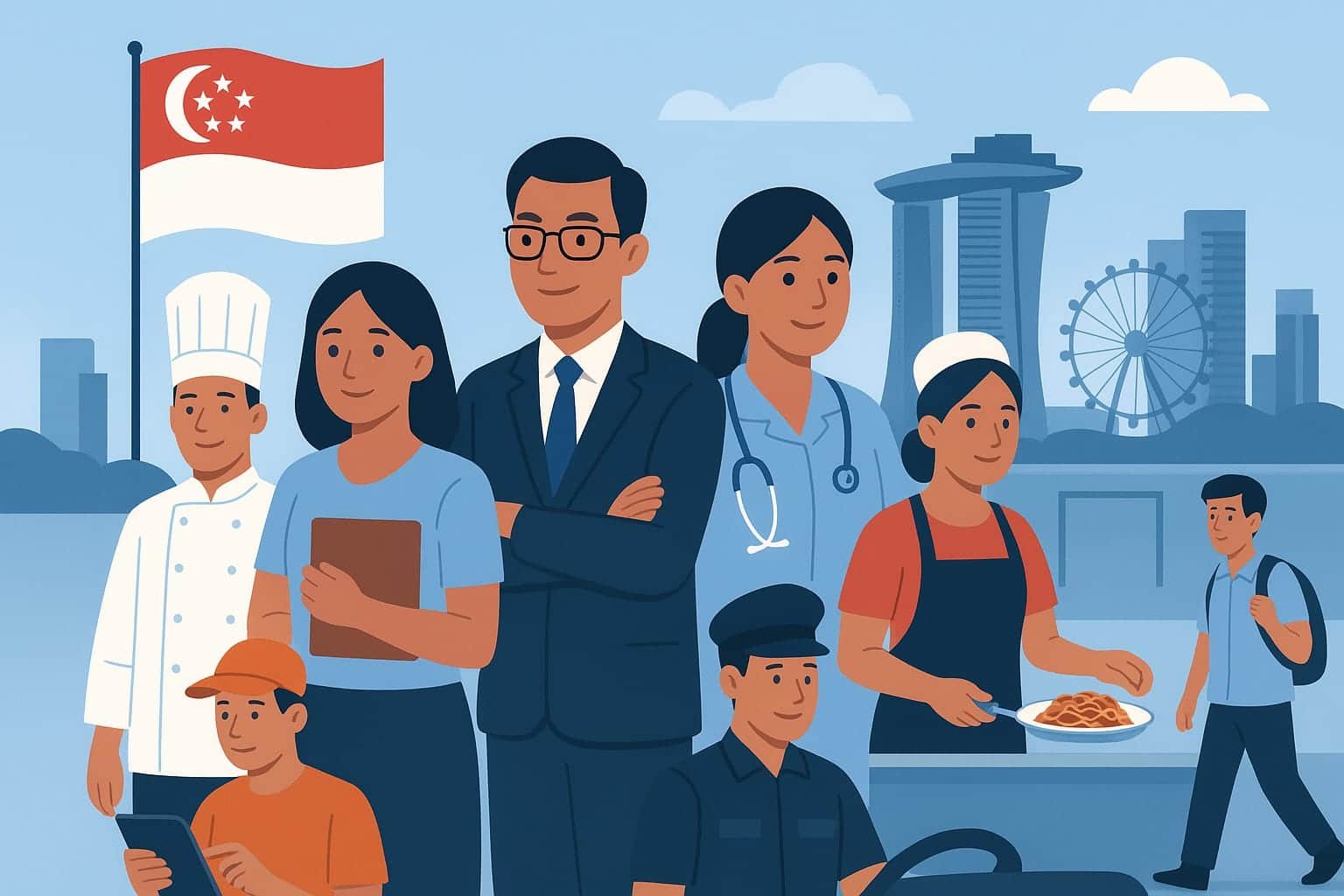
Singapore, a vibrant island city-state in Southeast Asia, is often admired for its modern skyline, efficient transportation system, and thriving economy. Yet behind the towering buildings and bustling shopping districts lies a deeply human story: the daily lives of ordinary Singaporeans who keep the city moving. When we ask the question, “What kind of work do Singaporeans usually do?” we uncover not just statistics, but the lived experiences of people who balance ambition, tradition, and resilience in a competitive global hub.
In this article, we will explore the average jobs Singaporeans work in, not only through numbers and data but also through a humanistic lens. We will walk through offices, stroll into bustling hawker centres, ride on buses and trains with uniformed staff, and step into classrooms filled with teachers shaping the next generation. By the end, you will see Singapore not just as a city of glass and steel, but as a community of workers—ordinary yet extraordinary—who embody the nation’s spirit.
1. The Landscape of Work in Singapore
Before diving into specific occupations, it is important to understand the broader landscape of Singapore’s labor market. Singapore is a small but globally connected economy, and its workforce reflects this international character. With limited natural resources, the country has always depended on its people—skilled, disciplined, and adaptable—to survive and thrive.
Today, Singapore’s employment is spread across several major sectors:
Services (finance, retail, hospitality, healthcare, education, etc.) – around 70% of the workforce
Manufacturing (electronics, pharmaceuticals, precision engineering, etc.) – about 12%
Construction and related industries – about 8%
Transportation and logistics – a significant share, given Singapore’s role as a global port
What this tells us is simple: the average Singaporean worker is most likely employed in the service industry. Yet within this vast category lie diverse jobs—from banking executives in gleaming offices to hawker stall assistants serving noodles at dawn.
2. Office Life: The Common Face of White-Collar Work
When people imagine Singapore, they often think of the financial district in Marina Bay, filled with tall glass skyscrapers. This image is not far from reality: many Singaporeans indeed work in office-based jobs.
Finance and Banking
Singapore is one of the world’s leading financial hubs. Thousands of locals work in banks, investment firms, insurance companies, and fintech start-ups. A typical day for a banking officer might involve client meetings, analyzing risk, or managing accounts for multinational corporations.
For many Singaporeans, finance jobs are considered prestigious and secure. Families often encourage their children to pursue such careers, not only for the salary but also for the stability it promises. Behind every polished banker in Raffles Place, however, is a human being who battles long hours, high stress, and the pressure of global competition.
Administration and Corporate Support
Not every office worker in Singapore wears a suit and tie. Many work as administrative assistants, HR officers, or customer service representatives. These jobs, though less glamorous, are essential for keeping businesses running. One might say the unsung heroes of corporate Singapore are the receptionists greeting visitors, the HR officers resolving workplace disputes, and the operations staff quietly ensuring systems don’t collapse.
3. The Lifeline of the Nation: Teachers and Educators
If you ask Singaporeans what shaped their careers, many will point to their teachers. Education is highly valued in Singaporean society, and this is reflected in the respect given to educators.
Teachers in primary and secondary schools carry heavy responsibilities. They do not merely teach mathematics or English; they nurture discipline, resilience, and creativity. Many Singaporean adults remember strict but caring teachers who demanded excellence but also offered encouragement.
Outside formal schools, tuition teachers and private educators form another huge employment sector. In Singapore’s competitive academic environment, after-school tuition is almost a norm. Thousands of Singaporeans earn a living as tutors, from full-time professionals to university students teaching part-time.
4. Healthcare Workers: The Silent Guardians
Another common profession in Singapore is healthcare. With an ageing population, demand for nurses, doctors, therapists, and caregivers has risen dramatically.
Nurses, in particular, represent a large part of the workforce. They work long shifts in hospitals, clinics, and nursing homes, caring for patients with quiet dedication. Doctors, too, are respected and admired, but the reality of healthcare work is often exhausting. Still, many Singaporeans choose this path out of passion and a sense of service to society.
Pharmacists, lab technicians, and allied health professionals also form an important segment. Each time a Singaporean collects medication at a polyclinic or undergoes a medical scan, there are healthcare workers—often locals—working behind the scenes.
5. Retail and Hospitality: The Human Face of Singapore
Step into Orchard Road, Chinatown, or the Jewel at Changi Airport, and you will encounter countless Singaporeans working in retail and hospitality.
Retail Staff
Sales assistants, cashiers, and store managers form a large share of everyday jobs. For many, retail work is their first job—especially younger Singaporeans who start part-time while studying. Though often demanding with long hours on their feet, retail jobs build resilience and people skills.
Food and Beverage
Equally significant is the food and beverage (F&B) industry. Singapore is famous for its hawker culture, recently recognized by UNESCO. Many locals run or work at hawker stalls, selling chicken rice, laksa, or roti prata. While some hawkers are older, younger entrepreneurs have also entered the scene, blending tradition with innovation.
Apart from hawkers, thousands work as waiters, chefs, or baristas in cafes and restaurants. In fact, for many Singaporeans, F&B is not just a job but a cultural passion—they take pride in serving food that represents their heritage.
6. Transport and Logistics: Moving a Nation
Singapore’s efficiency is often praised, and much of it is due to workers in transport and logistics.
Public Transport Workers
Every day, millions ride MRT trains and buses. Behind this smooth operation are train captains, bus drivers, and station managers. While automation has reduced some roles, human workers remain essential. For example, bus drivers often develop friendly connections with regular passengers, turning routine commutes into human moments of warmth.
Logistics and Port Workers
As one of the world’s busiest ports, Singapore employs many in logistics. From cargo handlers to supply chain coordinators, Singaporeans play a vital role in ensuring goods move seamlessly through the island. With the rise of e-commerce, delivery drivers and couriers have also become common, riding motorcycles or vans to bring parcels to homes.
7. Construction and Skilled Trades
Though much of Singapore’s construction workforce consists of foreign workers, there are also many locals in supervisory, engineering, and project management roles. Civil engineers, safety officers, and site managers are common Singaporean jobs.
Skilled trades such as electricians, plumbers, and air-conditioning technicians also remain in demand. These are the people Singaporeans call when lights fail, pipes leak, or aircon units stop working in the tropical heat. Though sometimes overlooked, such jobs are indispensable.
8. Government and Public Service
Singapore is known for its efficient government, and this is powered by thousands of civil servants. From policy officers in ministries to town council staff managing estates, many Singaporeans are employed in public service.
Teachers, police officers, and military personnel fall under this category as well. National Service (NS) means most Singaporean men spend time in uniform, and some continue careers in the Singapore Armed Forces or Police Force.
For many, working in government is seen as an honorable path—contributing directly to the nation’s progress.
9. Technology and the Future of Work
In recent years, a new trend has emerged: technology jobs. Software developers, data analysts, AI specialists, and cybersecurity experts are increasingly common among younger Singaporeans.
Start-ups in fintech, biotech, and gaming attract ambitious youth. At the same time, the government actively encourages upskilling, meaning many Singaporeans transition from traditional jobs into tech-related roles.
This reflects a larger truth: the average Singaporean job is not static. It evolves with global trends, education, and policy.
10. The Gig Economy and Part-Time Work
Beyond full-time careers, many Singaporeans participate in the gig economy. Food delivery riders, private-hire car drivers, freelance designers, and online sellers represent a growing portion of the workforce.
For some, gig work supplements income; for others, it provides flexibility. Yet gig workers also face uncertainty, as income depends on demand. Still, they illustrate Singaporeans’ adaptability and entrepreneurial spirit.
11. Balancing Ambition and Humanity
It is easy to reduce Singapore’s workforce to statistics—percentages in services, numbers in manufacturing, figures in logistics. But to truly understand what jobs Singaporeans do, one must see the human side.
The young teacher staying up late to grade papers.
The nurse holding an elderly patient’s hand.
The hawker waking at 4 a.m. to prepare broth.
The bus driver who greets every passenger with a smile.
The coder in a co-working space dreaming of launching a start-up.
These are the faces of Singapore’s workforce—each one carrying personal hopes, family responsibilities, and silent sacrifices.
12. Conclusion: What Does the Average Singaporean Do?
So, what jobs do Singaporeans usually work in? The answer is broad: most are in the service industry, with large numbers in finance, education, healthcare, retail, and logistics. Many also work in government, technology, and gig economy roles.
But beyond the categories, what truly defines Singapore’s workforce is its adaptability and resilience. Whether in offices, classrooms, hospitals, or hawker centres, Singaporeans approach their work with determination. Each job, no matter how humble or prestigious, contributes to the city’s identity as a global hub that never stops moving.
In the end, the average Singaporean job is not just a profession—it is part of a collective story of survival, growth, and humanity. And that story continues to evolve with every new generation that steps into the workforce.