 admin
admin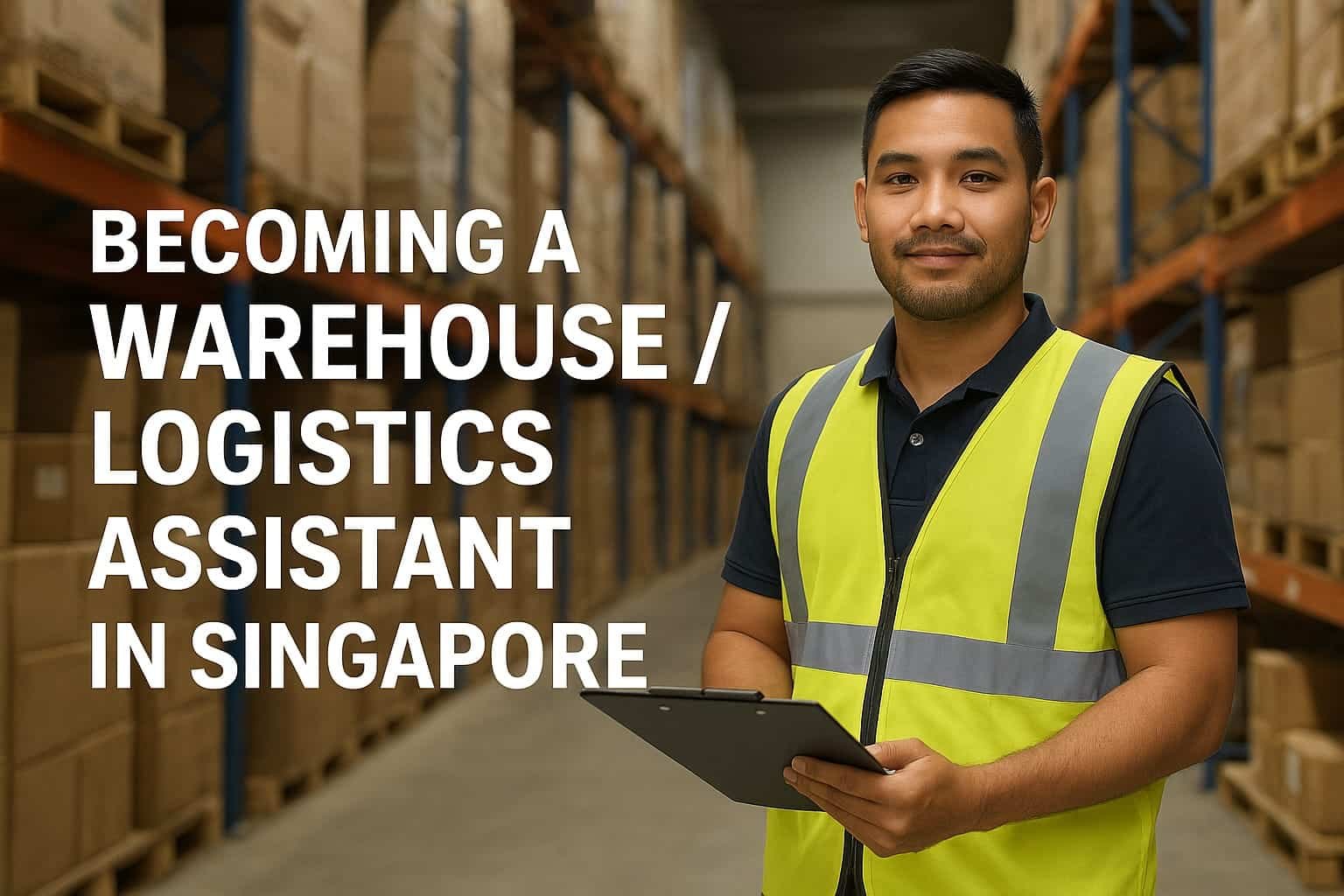
In today’s fast-paced global market, the logistics and warehousing industry plays a silent but critical role in ensuring that goods move seamlessly from source to consumer. Behind every online order, every stocked shelf, and every supply chain surprise lie people working behind the scenes—warehouse assistants, logistics assistants, and operations teams.
If you’ve come across a job listing like Warehouse Assistant / Logistics Assistant, especially one in Singapore with a 4-day work week, up to SGD $3,500 gross including overtime, multiple incentives, shift allowances, and sign-on bonuses, you might feel both excited and curious. What is this job really about? What are the expectations, the benefits, the challenges? And how do you set yourself apart?
This article aims to explore that fully: the roles and responsibilities, the skills and mindset required, the pay and perks, career potential, and how to make a strong application (especially in Singapore). By the end, whether you are considering applying or hiring, you’ll have a clear picture of what being a Warehouse / Logistics Assistant entails—and what it can become.
Table of Contents
1. What is a Warehouse / Logistics Assistant?
2. Key Responsibilities & Daily Tasks
3. Hard and Soft Skills Required
4. Physical Requirements & Workplace Realities
5. Pay, Benefits & Perks in Singapore
6. Why Employers Offer Sign-On Bonus, Incentives, & AWS
7. What Makes a Strong Candidate
8. Challenges & How to Overcome Them
9. The Work Schedule: Shifts, Overtime, 4-Day Weeks
10. Safety, Standards, and KPIs
11. Career Growth Opportunities
12. Tips for Applying & Getting Noticed
13. FAQs
14. Conclusion
1. What is a Warehouse / Logistics Assistant?
A Warehouse Assistant (sometimes called Warehouse Operative, Warehouse Associate) or Logistics Assistant supports the supply chain by helping with all kinds of physical, administrative, and operational tasks in a warehouse or logistics environment. The role could involve receiving goods, verifying shipments, storing inventory, picking and packing orders, quality checks, documentation, dispatch, and maintaining safety and order.
In many organizations, the Logistics Assistant might also handle paperwork, tracking shipments, coordinating with suppliers, ensuring proper documentation, and helping inventory flow smoothly.
In the Singapore job you saw, the role likely emphasizes both the manual, physical side (carrying items, wrapping goods, moving stock) and the performance metrics (hitting KPIs, fast and accurate work).
2. Key Responsibilities & Daily Tasks
What could your day look like as a Warehouse / Logistics Assistant? Here are common tasks you’ll likely do, based on typical job descriptions:
Receiving shipments: Checking items when they arrive to ensure correct quantity, quality, matching invoices, and goods-in documentation.
Putting away stock / storing inventory: Moving goods from the receiving dock to their designated storage location, organizing inventory and labels.
Picking and packing orders: When orders are placed, selecting the right items, packing them securely, possibly wrapping goods, preparing them for dispatch. Accuracy is very important.
Dispatching goods: Ensuring shipments go out on schedule, that paperwork is correct, that shipping labels are applied, that items are loaded properly.
Quality checks: Identifying damaged goods, checking for defects, ensuring proper packing etiquette. Reporting problems.
Documentation and records: Maintaining stock counts, updating inventory systems, verifying invoices, reconciling shipping documents, sometimes clerical work.
Maintaining warehouse cleanliness and safety: Keeping aisles clear, packing areas clean, following safety protocols. Hazards, spills, damage must be reported.
Meeting key performance indicators (KPIs): Speed, accuracy, throughput, error rates, etc. In many roles, performance metrics are tracked closely.
In the job advertisement you shared, tasks include: “Pick and pack goods,” “wrapping goods,” “Make sure hit KPI.” These align with standard expectations.
3. Hard and Soft Skills Required
To do well, you’ll need a mix of physical capability, precision, communication, and mindset. Here are key skills:
Hard / Technical Skills
Physical strength and stamina: Being able to lift or carry 25-30 kg regularly is explicitly required in your example.
Basic handling of packing and wrapping equipment: Using tools for wrapping, packaging, possibly using pallet jacks, trolleys, etc.
Familiarity with inventory systems or warehouse management software (WMS): Even basic data entry, scanning, counting.
Basic math and measurement skills: Counting, weighing, verifying quantities.
Reading labels, following instructions: Accuracy matters; mismatches cause problems down the line.
Soft Skills
Attention to detail: Tiny mistakes in order picking or documentation can lead to returns, lost goods, or unhappy customers.
Discipline & reliability: Arriving on time, following shift schedules, following safety procedures.
Teamwork: Often you’ll be part of a bigger team; coordination with others is needed.
Time management / speed: Doing tasks efficiently under pressure, especially when KPIs are involved.
Communication: Reporting damage, issues; sometimes communicating with supervisors; reading instructions.
4. Physical Requirements & Workplace Realities
Working in a warehouse or logistics environment is physically demanding in many cases. Things to expect:
Lifting and carrying weight: As in your posting, up to 25-30 kg. You’ll also handle boxes, pallets, possibly bulky or awkward items.
Shift work: Morning, evening, and night shifts are common. The job you saw allows either day or night shift (7am-7pm / 7pm-7am).
Extended standing / walking: You will be on your feet a lot. Traversing aisles, moving between loading docks, packing stations.
Repetitive tasks: Packaging, picking, wrapping goods happens in cycles, often over many hours. This requires endurance, consistency, and conscious attention to avoid fatigue errors.
Temperature, noise, safety issues: Warehouses may be hot, cold, loud, or have lifting equipment sounds. Personal protective equipment (PPE) may be required.
Understanding these realities helps in gauging whether this role is the right fit and preparing accordingly.
5. Pay, Benefits & Perks in Singapore
One of the reasons roles like the one you posted are attractive is the pay and benefits. Let’s break down what was advertised and what candidates might expect:
What the Posting Offers
Gross salary including overtime: SGD $3,500++ per month
Shift allowance: $12/day for day shift; $24/night for night work.
Multiple incentives: Likely attendance, performance, KPIs etc.
AWS + VB: Annual Wage Supplement (commonly called 13th month) + Variable Bonus.
Sign-on bonus: S$500 + S$1,450 (exact conditions likely tied to length or completion of probation).
Assuming you fulfill the requirements (Singaporean, able to carry required weight, warehousing experience), this can be a lucrative role, especially with overtime and incentives.
What to Consider: Deductions, Real Take-Home, Overtime
Deductions: CPF (Central Provident Fund), income tax, perhaps healthcare or other statutory deductions.
Overtime: Depending on the number of hours worked beyond normal shift, overtime pay may significantly increase gross.
Shift premiums: Night shift often is paid at higher rate; the shift allowance adds to that.
Other perks: Some employers may offer transport allowance, meals, PPE, training.
Comparison in Market
Such roles in Singapore tend to range in pay depending on employer, responsibility, shift, experience. Roles that include night shift and heavy lifting tend to pay more. The offering of $3,500++ gross is at the higher end for such positions, especially with the bundled allowances and bonuses.
6. Why Employers Offer Sign-On Bonus, Incentives, & AWS
Employers often include bonuses and incentives in job packages for warehouse/logistics roles because:
Attraction: To draw candidates in competitive labor markets, especially for physically demanding roles.
Retention: Sign-on bonuses, variable bonuses, and wage supplements incentivize people to stay past probation period.
Performance: Incentives tied to KPIs help motivate higher productivity, better accuracy, fewer errors.
In Singapore, AWS (Annual Wage Supplement) is common in many sectors and is something employees expect. VB (Variable Bonus) gives employers flexibility to reward based on business or personal performance.
Shift allowances compensate for working unsociable hours. All these help balance the demands of the job with employee satisfaction.
7. What Makes a Strong Candidate
If you want to stand out when applying for such a role, consider the following:
Relevant experience: Even one year of warehousing or logistics work helps. Employers value familiarity with picking, packing, inventory checks, shipping.
Demonstrable physical fitness: Able to lift and carry weight (25-30 kg), capability to do repetitive tasks. If you have any lifting certifications or safety training, highlight them.
Understanding of KPIs: If previously you met targets (orders per hour, error rate, attendance), be ready to share.
Reliability & attendance: Employers need people they can count on. Good attendance records are a plus.
Attention to detail: Mistakes cost time and money. Show examples of accuracy.
Adaptability & flexibility: Willing to work night shifts, overtime, adhere to safety rules, adapt to a fast-paced environment.
Also, a clean resume with a well-written cover note helps. In your case, they ask to send via WhatsApp with resume — ensure your resume is clean, clearly lists experience, physical capabilities, and any relevant skills.
8. Challenges & How to Overcome Them
Every job has its tough sides. Here are challenges for a Warehouse / Logistics Assistant, along with tips to navigate them:
Challenge How to Mitigate / Overcome
Physical fatigue / risk of injury Use proper lifting techniques; stretch; take rest breaks; use PPE; don’t rush at expense of safety.
Repetitive tasks leading to monotony Break your work into mini-goals; focus on accuracy and improvement; use slow periods for learning or improving processes.
Working nights / shift disruptions Plan sleep schedule carefully; ensure rest; maintain good diet; manage social commitments.
Pressure to hit KPIs Know what the KPIs are; ask for feedback; prioritize quality and speed; reduce mistakes; learn better ways to work more efficiently.
Temperature, noise or environmental discomfort Use ear protection if available; hydrate; follow safety gear instructions; report environmental issues (ventilation, lighting, safety hazards).
Dealing with these well can make the job sustainable and maybe even rewarding beyond the paycheck.
9. The Work Schedule: Shifts, Overtime, 4-Day Weeks
One aspect of the job you posted that stands out is the 4-day work week. This means fewer working days for a full-time position, which can be very appealing. But usually there are trade-offs:
Longer shifts per day: If the week has fewer days, shifts could be long (e.g. 12 hours) or include overtime.
Choice of shifts: Day or night. Night shifts often come with higher allowances.
Overtime: Regular overtime might be required, especially during busy periods. Because the gross salary is listed including OT, how much you earn will depend on how much overtime is available or required.
Carefully ask during interview: what is expected shift pattern, how overtime is computed and scheduled, rest days, etc.
10. Safety, Standards, and KPIs
Safety: Warehouses can be hazardous: moving machinery, heavy items, slippery floors, stacking, etc. Employers expect all staff to follow safety protocols. Proper equipment, training, and awareness are essential.
Standards and Quality: Employers often have quality metrics: damage rate, packing accuracy, order fulfillment speed, clean workspace, adherence to documentation. If your error rate is low, you’ll stand out.
KPIs (Key Performance Indicators) may include:
Number of orders picked per hour
Accuracy of orders (error/returns)
Packing speed
Attendance and punctuality
Adherence to safety procedures
Meeting or exceeding KPIs can lead to incentives, better shift options, or promotions.
11. Career Growth Opportunities
While the role may seem entry level in many cases, there’s real potential for growth if you treat it strategically:
Senior roles: Senior warehouse assistant, shift supervisor, team lead.
Specialization: Inventory control, quality assurance, safety officer, equipment operation (e.g. forklift).
Logistics coordination: Moving into logistics admin, shipping/receiving coordination.
Managerial path: Warehouse manager or operations manager.
Skill building (e.g., learning inventory systems, handling larger scale shipments, leading small teams) helps. Employers typically reward those who show responsibility, initiative, reliability.
12. Tips for Applying & Getting Noticed
Here are practical tips if you plan to apply for such a job in Singapore or similar markets:
1. Tailor your resume: Highlight warehousing / logistics experience; physical capability; any safety training; willingness to work required shift types.
2. Use relevant keywords: Since many applications are filtered by key scrutiny (keywords like “warehouse assistant,” “logistics,” “lifting up to 30kg,” “experience 1 year,” etc.), put these in your resume where true.
3. Include measurable achievements: For example, “picked 100+ orders per day with 99% accuracy,” or “maintained error rate under 2%,” or “perfect attendance record.” These help.
4. Prepare for interview / test: You may be asked to demonstrate lifting, talk about how you handle repetitive tasks, how you meet KPIs, how you follow safety rules.
5. Show reliability and flexibility: Mention willingness to work night shift, overtime, shift swap, fast response, etc.
6. Good presentation & documentation: Even in a hands-on job, having a clean, clear resume, punctual posture, respect for safety gear, etc., makes an impression.
7. Ask questions: When offered the job or during interview, clarify things like overtime policy, shift schedule, rest days, allowances, transportation, uniform, protective gear.
13. Frequently Asked Questions (FAQs)
Q: Do I need any formal qualifications?
A: Usually not beyond basic schooling. More important are physical readiness, willingness to follow instructions, and prior warehousing experience. Some sites may prefer certificates especially for equipment operation (forklift, safety training).
Q: Is prior experience mandatory?
A: In your job posting, yes: “Min 1 year of warehousing experience.” However, this can vary by employer. Entry roles sometimes accept less or allow on-the-job training.
Q: What if I cannot carry 25-30kg?
A: That requirement means you’ll regularly handle heavy items. If you can’t, the job may be physically too demanding or unsafe. There might be lighter roles in logistics admin or assistance without heavy lifting.
Q: How is overtime handled?
A: Usually at rates above base pay. Singapore’s labor laws stipulate overtime pay under certain conditions. Make sure you understand how overtime is calculated in your contract: is it “gross including overtime” or base plus overtime separately.
Q: What is AWS + VB?
A: AWS stands for Annual Wage Supplement (sometimes called 13th month pay), VB is Variable Bonus (performance-based). These are common in Singapore and indicate additional earnings beyond basic salary.
Q: How stable is this kind of work?
A: Warehousing and logistics are essential sectors. Demand tends to be more stable than many others, especially with e-commerce and supply chain expansion. But work volume may fluctuate, affecting overtime, shift scheduling.
14. Conclusion
Working as a Warehouse / Logistics Assistant in Singapore, particularly with a good compensation package including overtime, shift allowances, sign-on bonus, AWS and VB, can be a solid opportunity. It offers:
A blend of physical work and responsibility
Clear metrics and expectations (KPIs) — which, if met, allow you to excel and increase earnings
Potential for personal growth, skill building, and advancement
However, success in this role depends on more than just wanting the job. You’ll need physical readiness, strong attention to detail, discipline, willingness to work shifts and sometimes under pressure, and the ability to commit to consistency and safety.
If you’re considering applying to the job you posted: assess your physical readiness, tailor your resume, be prepared to speak about your past warehousing experience, how you have met goals, how you can contribute, and be clear about your expectations (shifts, overtime, allowances).
If you like, I can also draft a sample resume or cover letter tailored for this specific warehouse/logistics assistant position in Singapore, or help you with interview prep. Would you like that?