A Complete Travel Guide to Peranakan Heritage, Colourful Shophouses, Local Food and Authentic Neighbourhood Experiences
Introduction: Discover the Authentic Charm of Katong–Joo Chiat, Singapore
Singapore is widely recognised for its modern skyline, luxury shopping malls, world-class hotels and impressive urban attractions. However, beyond the famous landmarks of Marina Bay and Orchard Road, there is a neighbourhood that offers a more personal and culturally rich experience. Katong–Joo Chiat, located in the eastern part of Singapore, invites visitors to discover a different side of the city, where colourful heritage buildings, traditional cuisine, independent boutiques and everyday neighbourhood life come together in a memorable way.
For travellers searching for the best places to visit in Singapore, Katong–Joo Chiat is an excellent destination for cultural tourism, food exploration and leisurely walking tours. The area is particularly famous for its pastel-coloured Peranakan shophouses, historic streets, traditional bakeries and distinctive local dishes. Unlike some of Singapore’s busiest tourist districts, this neighbourhood encourages visitors to slow down, explore on foot and appreciate the small details that make a place special.
What makes Katong–Joo Chiat especially appealing is its human character. The neighbourhood is not simply a collection of heritage attractions designed for visitors. It is also a living community where residents shop for groceries, meet friends at coffee shops, visit traditional eateries and continue everyday routines within a historically significant environment. For anyone planning a Singapore travel itinerary, this combination of cultural heritage and contemporary local life provides a refreshing alternative to conventional sightseeing.
The official Singapore tourism guide highlights the district’s colourful Peranakan architecture, cultural attractions, heritage restaurants and modern cafés as key reasons to explore the neighbourhood. These qualities make Katong–Joo Chiat suitable for first-time visitors, returning travellers, families, photography enthusiasts and anyone interested in discovering authentic Singaporean culture.
1. Understanding the History of Katong–Joo Chiat
To appreciate Katong–Joo Chiat fully, it helps to understand the history behind its streets and buildings. The area developed from a coastal settlement into a residential and commercial neighbourhood as Singapore expanded. Its location in the eastern part of the island contributed to its distinctive character, particularly before modern transportation and urban development transformed the surrounding landscape.
Historically, Katong and Joo Chiat became associated with diverse communities, including Peranakan Chinese and Eurasian families. Their presence helped shape the district’s architecture, food traditions, businesses and social identity. Over generations, homes and commercial premises reflected the tastes, lifestyles and cultural influences of the people who lived and worked there.
The name Joo Chiat is associated with Chew Joo Chiat, a prominent businessman and landowner whose name became attached to the district. As residential development increased, streets were lined with houses, shops and businesses that served the growing population. Many buildings reflected the commercial and domestic needs of their time, creating the distinctive combination of residential and retail architecture still visible today.
Modern Katong–Joo Chiat has continued to evolve, but its historical identity remains an important part of its appeal. Conserved buildings stand alongside contemporary cafés, restaurants, lifestyle stores and boutique hotels. This mixture allows visitors to experience Singapore’s architectural heritage without feeling disconnected from modern urban life.
For travellers interested in Singapore history, visiting Katong–Joo Chiat offers an opportunity to understand how neighbourhoods develop through migration, trade, family traditions and changing lifestyles. Rather than learning about the past only through museum displays, visitors can observe historical details within an active residential community.
2. The Colourful Peranakan Shophouses of Koon Seng Road
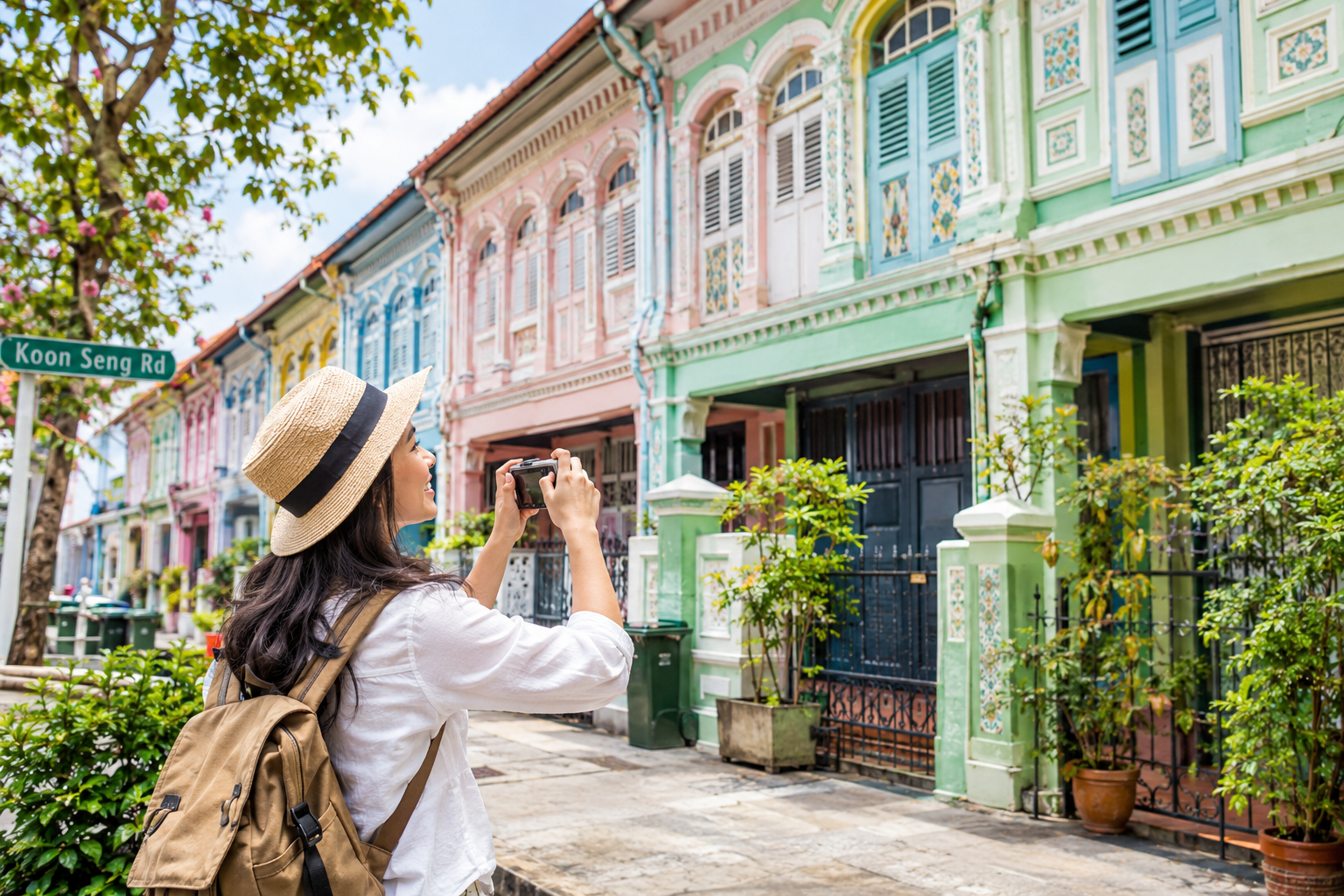
One of the most recognisable attractions in Katong–Joo Chiat is the row of colourful Peranakan shophouses along Koon Seng Road. These buildings have become popular photography locations because of their pastel façades, decorative tiles, ornate windows and traditional architectural details.
The houses are particularly attractive to visitors who enjoy architectural photography, heritage travel and Instagram-worthy places in Singapore. Soft shades of pink, green, blue, yellow and cream create a striking visual contrast against the tropical environment. Intricate patterns, floral decorations and carefully designed façades reveal the craftsmanship associated with traditional residential architecture.
Many of these shophouses date from the early twentieth century, with examples commonly associated with the 1920s. Their architectural features reflect a mixture of influences, including Chinese decorative traditions and broader regional design elements. The result is a distinctive streetscape that feels different from Singapore’s modern commercial districts.
Walking along Koon Seng Road is one of the simplest ways to experience the visual appeal of Katong–Joo Chiat. Visitors can admire the façades, photograph the architectural details and appreciate the preservation of historical buildings within a modern city. The area is especially attractive in the morning, when the natural light can highlight the colours and textures of the buildings.
However, these beautiful houses are also private residences, not simply tourist attractions. Visitors should respect residents’ privacy, avoid entering private property, keep noise to a reasonable level and ensure that photography does not disturb people living in the area.
For travellers looking for beautiful places in Singapore beyond the usual tourist attractions, Koon Seng Road offers a meaningful experience. Its charm comes not only from its colourful architecture but also from the reminder that cultural heritage can remain part of everyday neighbourhood life.
3. Discovering Peranakan Culture in Singapore
Peranakan culture is one of the most important elements of the Katong–Joo Chiat identity. The term Peranakan generally refers to locally rooted communities whose histories developed through cultural interaction and intermarriage, including communities with Chinese and Malay influences. Peranakan traditions are diverse, and the term should not be understood as describing one completely uniform culture.
In Singapore, Peranakan heritage can be seen in traditional clothing, decorative arts, household objects, architecture and cuisine. The combination of influences creates distinctive cultural expressions that have developed across generations. Katong–Joo Chiat is one of the neighbourhoods where visitors can explore these traditions through historic buildings, speciality shops and cultural attractions.
Traditional Peranakan clothing, including the kebaya, demonstrates the attention to detail associated with the community’s material culture. Intricate embroidery, carefully selected fabrics and decorative accessories reveal the importance of craftsmanship and personal presentation. Beaded footwear, known as kasut manek, is another example of traditional artistry, often requiring considerable patience and skill to produce.
Food is equally important to understanding Peranakan heritage. Many traditional recipes combine Chinese culinary techniques with Malay and regional ingredients, creating complex flavours involving spices, herbs, coconut milk and other distinctive elements. Recipes may vary between families, and the knowledge required to prepare them is often passed from one generation to the next.
Exploring Peranakan culture in Katong–Joo Chiat is therefore more than an opportunity to see attractive buildings or sample unfamiliar dishes. It allows travellers to consider how communities preserve identity while adapting to social and economic change. This makes the district especially rewarding for visitors interested in cultural travel, heritage tourism and the multicultural history of Singapore.
4. The Intan: A Personal Introduction to Peranakan Heritage
For visitors who want to explore Peranakan culture in greater depth, The Intan is a notable heritage attraction in Katong–Joo Chiat. Unlike a large conventional museum, this private heritage home is known for its intimate atmosphere and collection of objects connected with Peranakan traditions.
The collection includes decorative objects, household items and cultural artefacts that help illustrate the community’s domestic life and artistic practices. These objects provide a more personal perspective on heritage because they relate to the routines, celebrations and social customs that shaped family life.
A visit to a heritage home can help travellers understand the stories behind the architecture and traditional crafts they encounter throughout the neighbourhood. Instead of viewing Peranakan culture only as an attractive visual style, visitors can learn about the cultural meanings associated with clothing, furnishings, ceremonies and everyday household objects.
Because The Intan is a private heritage attraction, visitors should check current admission arrangements and booking requirements before planning a visit. Availability may differ from that of larger public museums, so advance planning is advisable.
For travellers seeking cultural experiences in Singapore, The Intan can provide a valuable addition to a walking tour of Katong–Joo Chiat. It is particularly suitable for people who want to learn about local history through personal stories and carefully preserved collections rather than through sightseeing alone.
5. Katong Laksa: A Must-Try Singapore Food Experience
No complete Katong–Joo Chiat travel guide would be complete without discussing Katong laksa. This well-known Singaporean dish is closely associated with the neighbourhood and remains a major attraction for local food enthusiasts and international visitors.
Katong laksa is a noodle dish traditionally served in a rich, aromatic broth featuring coconut milk and a blend of spices. Depending on the preparation, the bowl may include prawns, fish cake, cockles and other ingredients. The balance of creamy coconut, savoury seafood and fragrant spices creates a distinctive flavour that many travellers associate with Singapore’s food culture.
One feature commonly associated with Katong laksa is the use of shorter rice noodles that can be eaten with a spoon. This makes the dish convenient to enjoy without chopsticks and distinguishes the local serving style from some other noodle dishes.
The Original Katong Laksa is among the established names associated with the dish. Visitors can explore local eateries and compare different interpretations, although recipes, prices and opening hours may change. Checking current information before visiting is a practical way to avoid disappointment.
For first-time visitors to Singapore, trying Katong laksa is more than a meal. It offers an introduction to the country’s multicultural culinary traditions and the way local food identities develop around particular neighbourhoods. Food lovers searching for the best local food in Singapore will find that Katong–Joo Chiat provides an excellent setting for discovering regional specialities.
A good approach is to visit during a relaxed lunch break, take time to enjoy the flavours and explore nearby streets afterwards. This creates a simple but rewarding travel experience that combines local cuisine, neighbourhood atmosphere and cultural discovery.
6. Traditional Peranakan Cuisine and Heritage Restaurants
Beyond Katong laksa, Katong–Joo Chiat is an excellent destination for travellers interested in traditional Peranakan cuisine. The district features eateries that introduce visitors to dishes shaped by generations of culinary knowledge and the cultural exchange that defines Singapore’s food heritage.
One well-known dish is ayam buah keluak, which combines chicken with the distinctive buah keluak nut. The preparation is associated with Peranakan cooking and is valued for its rich, earthy flavour. The nut requires specialised preparation because it is naturally toxic when untreated, so it should only be consumed when properly processed and prepared by knowledgeable cooks.
Another traditional dish is ikan assam pedas, a fish preparation featuring a sour and spicy tamarind-based gravy. Its combination of acidity, heat and savoury ingredients demonstrates the complexity often found in Peranakan cooking. Otak-otak, a seasoned fish mixture prepared with spices and commonly cooked in a leaf wrapping, is another regional favourite worth exploring.
Restaurants such as Guan Hoe Soon are associated with the neighbourhood’s Peranakan dining heritage. Meanwhile, other establishments offer different interpretations of traditional recipes, allowing visitors to compare flavours and presentation styles.
Dining in a heritage restaurant can be an especially meaningful experience for travellers who want to understand the connection between food and cultural identity. Recipes may reflect family traditions, historical influences and the availability of ingredients over time.
For anyone planning a Singapore food itinerary, spending part of a day exploring the traditional restaurants of Katong–Joo Chiat is a worthwhile choice. It allows visitors to discover flavours that cannot be fully appreciated through photographs or written descriptions alone.
7. Kway Guan Huat Joo Chiat Popiah and Traditional Food Craft
Another food experience worth exploring is popiah, a fresh spring roll that has a long-standing place in Singapore’s food culture. Kway Guan Huat Joo Chiat Popiah is a recognised family-run establishment associated with this traditional dish and the craft of preparing it.
Popiah typically consists of a thin wrapper filled with ingredients such as vegetables, turnip, sauces and other additions that vary according to the recipe. The preparation requires attention to texture and balance, ensuring that the wrapper remains manageable while the filling delivers a combination of savoury, sweet and aromatic flavours.
Traditional food businesses often preserve knowledge that cannot be replaced easily by mass production. The selection of ingredients, preparation techniques and methods of assembling each portion all contribute to the final result. Visiting a long-established shop therefore provides insight into the work involved in maintaining a familiar local food tradition.
For tourists, trying popiah offers a different experience from eating a bowl of laksa or visiting a modern café. It introduces a lighter dish and highlights the role of small family businesses in preserving Singapore’s culinary heritage.
Visitors interested in traditional Singaporean food should consider including popiah in a wider food walk through Katong–Joo Chiat. Exploring several small eateries in one afternoon can create a more complete understanding of the neighbourhood’s culinary identity while supporting businesses that contribute to its local character.
8. Modern Cafés, Independent Shops and Contemporary Lifestyle
Although Katong–Joo Chiat is celebrated for its history, the neighbourhood is not frozen in the past. Contemporary cafés, independent retailers and modern dining concepts have become part of its character, creating an interesting balance between heritage and innovation.
Visitors can find cafés serving speciality coffee, pastries, desserts and modern interpretations of familiar flavours. These establishments attract residents, remote workers, young professionals and travellers looking for a relaxed place to take a break between sightseeing activities.
Independent shops also contribute to the neighbourhood’s appeal. Some specialise in books, design products, souvenirs, homeware or locally inspired gifts. Others showcase handcrafted objects and products that reflect Singaporean culture and regional artistic influences.
This mixture of traditional businesses and modern retail makes shopping in Katong–Joo Chiat different from visiting a large shopping mall. Rather than moving between identical retail spaces, visitors can discover individual stores with distinctive personalities and carefully selected products.
For travellers searching for unique things to do in Singapore, spending time in these small businesses can be a rewarding experience. A coffee break, a conversation with a shop assistant or the discovery of an unusual handmade item can become a memorable part of a trip.
The neighbourhood’s contemporary character also demonstrates how heritage districts remain relevant. Traditional buildings can accommodate new businesses while continuing to provide a sense of place. When managed thoughtfully, this relationship between preservation and modern life helps keep historic neighbourhoods active and attractive to future generations.
9. Street Art, Photography and Everyday Neighbourhood Life
Photography is one of the most popular activities in Katong–Joo Chiat, particularly for visitors interested in architectural details, colourful streets and lifestyle photography. The area’s pastel shophouses provide a distinctive visual setting, while murals and decorative details offer additional opportunities for creative images.
However, the best photography experience does not necessarily involve rushing between famous locations. Walking slowly through the neighbourhood allows visitors to notice smaller details, including patterned tiles, old signboards, traditional shopfronts, plants outside residential buildings and the contrast between historic façades and modern businesses.
Morning and late afternoon can be pleasant times for exploring outdoors, although Singapore’s tropical weather may bring heat, humidity and sudden rain. Visitors should bring drinking water, wear comfortable footwear and take breaks when needed.
Street photography should be approached respectfully. Residents and shopkeepers are part of the neighbourhood’s daily life, not simply subjects for tourist photographs. Asking permission before taking close-up portraits and avoiding intrusive photography can help create a more considerate travel experience.
For content creators and travel bloggers, Katong–Joo Chiat provides many opportunities to produce engaging travel stories. Instead of focusing exclusively on the most photographed buildings, a more human approach can include the people, traditions and small businesses that make the area distinctive.
This approach also creates richer travel content. Articles about the best photography spots in Singapore become more useful when they explain the cultural context of a location rather than merely describing where to take a picture.
10. Religious Diversity and Cultural Landmarks
Katong–Joo Chiat also reflects the wider religious and cultural diversity that characterises Singapore. The surrounding district contains places of worship and community institutions associated with different traditions, illustrating how different communities have contributed to the area’s development.
Sri Senpaga Vinayagar Temple is one notable landmark associated with Hindu religious life in the area. Its architectural features and religious significance offer visitors an opportunity to learn about the practices and traditions of Singapore’s Hindu community.
Masjid Khalid is another local religious landmark. Mosques serve not only as places of worship but also as important institutions within the social and cultural life of Muslim communities.
When visiting religious sites, travellers should respect dress requirements, photography restrictions and worship schedules. It is advisable to check visitor guidance before entering, particularly during religious services or special occasions.
Exploring cultural landmarks can help visitors understand Singapore beyond its commercial attractions. The country is home to communities with different languages, religious traditions and historical experiences, and neighbourhoods such as Katong–Joo Chiat provide opportunities to observe this diversity in everyday settings.
For travellers interested in responsible tourism, approaching these places with curiosity and respect adds depth to the overall experience. The goal is not simply to collect photographs but to appreciate the traditions and communities that continue to shape the neighbourhood.
11. Shopping for Peranakan Crafts, Souvenirs and Local Products
Shopping in Katong–Joo Chiat offers a more personal alternative to the large retail centres found elsewhere in Singapore. Visitors can explore independent boutiques, traditional food shops and speciality retailers selling products connected with local culture and everyday life.
Rumah Bebe is associated with Peranakan crafts, traditional fashion and decorative beadwork. It offers an example of how specialised retailers can help maintain interest in traditional artistic practices. Visitors interested in craftsmanship may find it worthwhile to explore the details of beaded accessories and other culturally inspired products.
Kim Choo Kueh Chang is another name associated with Peranakan food and heritage products. Shops of this kind connect culinary traditions with the wider cultural identity of the neighbourhood, offering visitors an opportunity to purchase food-related gifts and discover traditional specialities.
Independent lifestyle stores can also be worth visiting for books, home accessories and locally inspired souvenirs. These products may offer a more distinctive reminder of Singapore than mass-produced items available in many tourist centres.
When purchasing traditional crafts, travellers should take time to understand the materials, production methods and cultural background of the products. This encourages more thoughtful shopping and helps visitors appreciate the skill involved in preserving traditional designs.
For tourists looking for unique souvenirs in Singapore, Katong–Joo Chiat provides an appealing combination of cultural shopping, food discoveries and independent retail. It is an ideal destination for visitors who prefer exploring small shops and learning about local products rather than spending an entire afternoon in a conventional shopping mall.
12. Where to Stay Near Katong–Joo Chiat
Choosing accommodation near Katong–Joo Chiat can be a practical option for travellers who want to explore eastern Singapore while enjoying a neighbourhood atmosphere. The area offers access to restaurants, cafés, shops and cultural attractions, making it appealing to visitors who prefer a local setting over staying directly in the central business district.
Hotel Indigo Singapore Katong is one accommodation option associated with the neighbourhood. Its design draws inspiration from local cultural influences, making it particularly relevant for travellers who appreciate hotels that reflect the character of their surroundings.
Other accommodation options in and around the district vary in style, facilities and price. Travellers may find hotels suited to short city breaks, business trips or longer visits, depending on their needs and budget.
Before booking a hotel in Katong–Joo Chiat, visitors should compare room prices, transport connections, guest reviews and available amenities. They should also check the distance between the property and their intended attractions rather than relying solely on the neighbourhood name.
Staying nearby can make it easier to enjoy early morning walks, relaxed dinners and spontaneous visits to local cafés. However, travellers who plan to spend most of their time around Marina Bay or Orchard Road may prefer accommodation closer to those destinations.
The best hotel choice depends on the purpose of the trip. For visitors interested in heritage, food and everyday Singaporean life, Katong–Joo Chiat can be an appealing base for discovering a less hurried side of the city.
13. How to Get to Katong–Joo Chiat
Katong–Joo Chiat is located in eastern Singapore and can be reached by public transport, taxi or private-hire car. Singapore’s public transport network makes the district accessible from many parts of the island, although the most convenient route depends on the starting point and destination within the neighbourhood.
Marine Parade MRT station on the Thomson–East Coast Line is a useful access point for parts of the Katong area. Eunos, Paya Lebar and Dakota stations may also be convenient depending on the route and the attractions visitors plan to explore.
From the nearest station, travellers may need to walk or take a short bus or taxi journey to reach particular streets, restaurants or heritage attractions. Because the neighbourhood covers several streets and sub-areas, it is useful to check the exact address before setting off.
Walking is one of the best ways to explore Katong–Joo Chiat once you arrive. Many of its attractions are best appreciated at a leisurely pace, and a walking route allows visitors to combine architectural sightseeing with food stops and independent shopping.
Singapore’s tropical climate can make long walks tiring, especially around midday. Carrying water, wearing breathable clothing and planning breaks at cafés or indoor attractions can make the experience more comfortable.
For first-time visitors, a practical approach is to choose one or two main attractions, explore nearby streets and leave time for unplanned discoveries. This creates a more relaxed itinerary than trying to visit every landmark in a single trip.
14. Suggested One-Day Katong–Joo Chiat Itinerary
A full day in Katong–Joo Chiat can provide a satisfying combination of heritage, food, photography and local shopping. Visitors do not need to rush through the neighbourhood to enjoy its highlights; a flexible itinerary allows time to appreciate the details that make the district distinctive.
Begin the morning with a walk around Koon Seng Road to admire the colourful Peranakan shophouses. Take photographs from public areas, notice the decorative tiles and architectural features, and remember that many of the buildings are private homes.
Continue towards Joo Chiat Road and the surrounding streets, where traditional businesses, cafés and speciality shops offer opportunities to explore local life. Depending on opening hours, you may wish to visit a heritage retailer or arrange a visit to The Intan in advance.
For lunch, try Katong laksa or explore a restaurant serving traditional Peranakan dishes. If you have enough time and appetite, consider sharing several smaller dishes to experience a wider variety of flavours.
In the afternoon, visit selected independent shops or enjoy coffee and dessert at a local café. You can also explore additional cultural landmarks if they fit your interests and the available visiting hours.
Finish the day with a relaxed dinner in the neighbourhood. Choosing a restaurant that serves traditional regional food can provide a fitting conclusion to a day focused on Singapore’s cultural heritage.
This itinerary can be adjusted according to weather, opening hours, mobility needs and personal preferences. Visitors travelling with children or older family members may prefer shorter walking distances and longer breaks.
The most important advice is to avoid treating Katong–Joo Chiat as a checklist of attractions. Its greatest appeal lies in the combination of architecture, food, history and everyday life, which becomes more rewarding when experienced at a comfortable pace.
15. The Best Time to Visit Katong–Joo Chiat
Katong–Joo Chiat can be explored throughout the year because Singapore has a tropical climate. However, weather conditions, opening hours and the timing of individual activities can influence the overall experience.
Morning is often a good time to walk around Koon Seng Road and photograph the heritage shophouses. Temperatures may be more comfortable than during the middle of the day, and softer sunlight can help bring out the colours of the buildings.
Late afternoon can also be pleasant for exploring the neighbourhood, visiting shops and enjoying a café break. However, visitors should remain flexible because rain showers may occur throughout the year.
Food enthusiasts may prefer to plan their visits around restaurant and shop opening hours. Some traditional businesses operate on particular schedules or close on selected days, so checking current information is advisable.
Weekdays and weekends offer different experiences. Weekdays may provide a quieter atmosphere in some areas, while weekends can bring more visitors to popular cafés and photography locations. Neither is automatically better; the right choice depends on whether you prefer a quieter walk or a busier neighbourhood environment.
Travellers planning around religious festivals or cultural events should confirm dates and public access arrangements in advance. Special occasions can offer additional cultural context, but they may also affect traffic, opening hours and crowd levels.
Overall, the best time to visit Katong–Joo Chiat is when you can explore without rushing. Allow enough time for walking, eating and learning about the neighbourhood rather than trying to fit the experience into a short stop between major tourist attractions.
16. Practical Travel Tips for a Better Experience
A little preparation can make a visit to Katong–Joo Chiat more enjoyable. First, wear comfortable shoes because exploring the neighbourhood involves walking along streets and between individual attractions. Breathable clothing is also useful in Singapore’s warm and humid conditions.
Second, plan your route around the places that interest you most. If architecture is your priority, begin with Koon Seng Road. If food is the main attraction, research local eateries and check their opening hours before travelling.
Third, respect the residential nature of the district. Avoid blocking entrances, entering private buildings without permission or making excessive noise while taking photographs. Responsible behaviour helps protect the neighbourhood’s character and supports the people who live there.
Fourth, keep some flexibility in your schedule. You may discover an interesting shop, a traditional snack or an attractive side street that was not included in your original plan. Leaving room for these discoveries often produces a more memorable travel experience.
Fifth, consider your dietary needs when exploring local cuisine. Ingredients and preparation methods vary between restaurants, so visitors with allergies or specific dietary requirements should ask staff for clear information before ordering.
Finally, verify current details for museums, shops, restaurants and hotels. Business operations, prices, admission requirements and transport arrangements can change. Official tourism resources and the individual businesses’ own information are useful starting points for planning.
These simple travel tips can help visitors enjoy Katong–Joo Chiat while supporting local businesses and respecting its cultural heritage.
17. Why Katong–Joo Chiat Deserves a Place on Your Singapore Travel List
Katong–Joo Chiat offers something that many travellers seek but do not always find in a major city: an opportunity to experience local identity beyond the most familiar tourist landmarks. Its colourful shophouses, traditional dishes, independent businesses and cultural attractions create a destination that rewards curiosity and patience.
The neighbourhood also demonstrates that heritage does not have to remain separate from modern life. Historic buildings continue to exist alongside cafés, hotels and contemporary shops, allowing the past and present to share the same streets.
For photographers, Katong–Joo Chiat provides distinctive architecture and colourful visual details. For food lovers, it offers opportunities to discover laksa, popiah and Peranakan cuisine. For cultural travellers, it introduces the history and traditions of communities that have helped shape Singapore.
Families can enjoy a relaxed day exploring the streets and sampling local food, while independent travellers may appreciate the freedom to create their own walking route. Returning visitors to Singapore can also use the neighbourhood to discover an atmosphere that differs from the city’s major commercial districts.
Most importantly, the experience encourages a more thoughtful form of tourism. Visitors are invited to look beyond attractive façades and consider the people, traditions and businesses that give the neighbourhood its identity.
For anyone searching online for the best cultural neighbourhoods in Singapore, places to eat in Katong, Peranakan heritage attractions or unique things to do in eastern Singapore, Katong–Joo Chiat deserves serious consideration.
Conclusion: Experience the Living Heritage of Katong–Joo Chiat
Katong–Joo Chiat is one of Singapore’s most distinctive neighbourhoods, bringing together cultural heritage, traditional food, historic architecture and contemporary urban life. Its colourful Peranakan shophouses attract photographers, while its restaurants and traditional food businesses invite visitors to discover flavours shaped by generations of culinary traditions.
Yet the neighbourhood’s greatest strength is not limited to its architecture or cuisine. It is the way these attractions remain connected to everyday community life. Residents continue to live in historic buildings, local businesses preserve traditional skills, and contemporary cafés introduce new ideas without completely erasing the area’s identity.
For travellers planning a Singapore holiday, Katong–Joo Chiat offers a valuable opportunity to explore a more personal side of the city. A walk along Koon Seng Road, a bowl of Katong laksa, a visit to a heritage attraction and an afternoon spent browsing independent shops can create a meaningful experience without requiring an elaborate itinerary.
Whether you are interested in Singapore cultural tourism, Peranakan history, local food, heritage photography or neighbourhood exploration, this eastern Singapore district has plenty to offer. Its appeal lies in the details: the colours of old buildings, the flavours of traditional dishes, the craftsmanship of cultural objects and the quiet routines of a living community.
Ultimately, visiting Katong–Joo Chiat is an invitation to experience Singapore at a slower pace. Rather than simply moving from one famous attraction to another, travellers can spend time understanding the history, people and traditions that make a place memorable. That combination of heritage, hospitality and everyday authenticity is what makes Katong–Joo Chiat a worthwhile destination for anyone seeking a richer Singapore travel experience.
SEO Information for Your Website
SEO Title: Katong–Joo Chiat Singapore Travel Guide: Peranakan Heritage, Food and Attractions
Meta Description: Discover Katong–Joo Chiat, Singapore, with this travel guide to colourful Peranakan shophouses, Katong laksa, traditional cuisine, heritage attractions, shopping and local experiences.
Suggested URL Slug: katong-joo-chiat-singapore-travel-guide
Primary SEO Keyword: Katong–Joo Chiat Singapore
Secondary SEO Keywords:
- Things to do in Katong–Joo Chiat
- Katong Singapore travel guide
- Joo Chiat heritage district
- Peranakan culture in Singapore
- Katong laksa Singapore
- Colourful shophouses Singapore
- Koon Seng Road Singapore
- Best local food in Katong
- Singapore cultural attractions
- Eastern Singapore travel guide
Suggested Image Alt Text: Colourful Peranakan heritage shophouses along Koon Seng Road in Katong–Joo Chiat, Singapore.
Recommended Internal Links: Add links to your existing articles about Singapore hotels, Singapore food guides, cultural attractions, neighbourhood walking tours and other destinations in Singapore.
Editorial Note: The article uses a natural SEO approach, with relevant keywords distributed throughout the content rather than repeated unnaturally. Verify current opening hours, admission arrangements, restaurant details and transport information before publication.