A Human-Centred Guide to History, Culture, Attractions and Things to Do
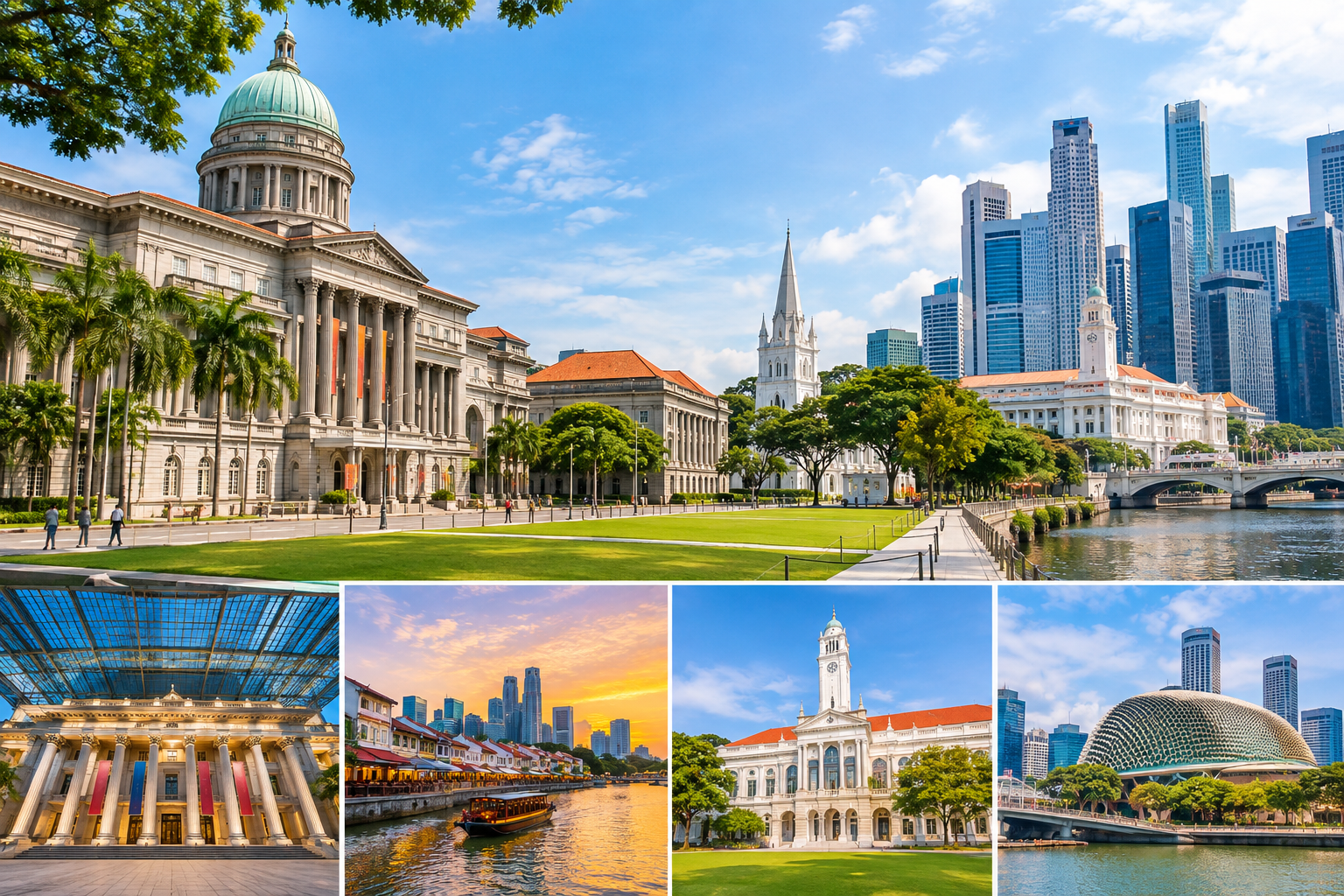
Singapore is often described through its modern skyline, world-class shopping malls, efficient public transport and impressive architecture. Yet, beyond the glass towers and busy commercial streets, there is a part of the city where Singapore’s history feels especially close: Civic District Singapore. Located at the heart of the city, the Civic District brings together historic buildings, national monuments, museums, public spaces, art institutions, waterfront scenery and important landmarks that help explain how modern Singapore developed.
For travellers searching for Civic District Singapore, this area offers much more than a collection of tourist attractions. It is a place where history and everyday city life meet. A short walk can take visitors from colonial-era architecture to contemporary art, from a historic courthouse to a modern cultural institution, and from quiet heritage spaces to the lively atmosphere around the Singapore River.
The Civic District is one of the most important historical areas in central Singapore. It is closely connected with the development of Singapore as a modern city and remains an important destination for culture, heritage, arts and tourism.
For anyone planning a Singapore itinerary, visiting the Civic District is a meaningful way to understand the city beyond its modern image. The district combines Singapore history, cultural attractions, museums, architecture, art, heritage sites and scenic walking routes in one convenient area.
What Is Civic District Singapore?
Civic District Singapore is one of the most historically significant areas in the city centre. It contains many buildings and public spaces connected to Singapore’s political, administrative, cultural and social development.
The district was developed as an important administrative area during Singapore’s colonial period. Over time, many of its historic buildings became important national landmarks and cultural institutions.
Today, walking through the Singapore Civic District can feel like travelling through different chapters of Singapore’s history. Historic government buildings stand alongside museums, theatres, galleries and contemporary cultural spaces.
This combination is one of the reasons Civic District Singapore remains popular with both international visitors and local residents. It is not simply a heritage zone preserved as a historical attraction. It is an active part of the city where people work, learn, meet friends, attend performances, visit exhibitions and enjoy public spaces.
The History of Civic District Singapore
Understanding the history of Civic District Singapore makes a visit much more meaningful. Many buildings and public spaces in this part of the city are connected to Singapore’s colonial administration and later development as an independent nation.
The Civic District has played an important role in Singapore’s political, cultural and social history. Several important government institutions, courts, religious buildings and cultural venues were established around this area.
The district’s history is also a story about people. Different communities contributed to Singapore’s development through trade, business, religion, education, culture and everyday life.
This broader perspective is important when exploring Singapore heritage. The Civic District is not only about impressive buildings and historical monuments. It is also about the people who lived, worked and gathered in the area over many generations.
For travellers, this makes the district particularly interesting. Instead of seeing Singapore history as a collection of dates and monuments, visitors can think about the people who once walked the same streets, worked in nearby buildings, operated businesses and helped shape the city.
National Gallery Singapore
One of the most important Civic District attractions is National Gallery Singapore. The gallery occupies the former City Hall and former Supreme Court buildings and has become one of the country’s major cultural institutions.
National Gallery Singapore is particularly important for people interested in Singapore art, Southeast Asian art and cultural history. Its collection provides visitors with an opportunity to explore the development of art across Singapore and Southeast Asia.
However, the building itself is also part of the experience.
The former City Hall and Supreme Court buildings are important historic landmarks. Their transformation into a major art gallery demonstrates how Singapore has preserved historic architecture while adapting it for modern cultural purposes.
Visitors can appreciate historic corridors, impressive interior spaces, architectural details and exhibition galleries while learning about regional art.
For travellers interested in Singapore museums and cultural attractions, National Gallery Singapore can easily become one of the main highlights of a Civic District itinerary.
City Hall and the Former Supreme Court
City Hall Singapore and the former Supreme Court buildings are among the most recognisable historic structures in the Civic District.
Their architecture reflects an earlier period of Singapore’s history, while their present use demonstrates the importance of heritage preservation.
The former Supreme Court is particularly interesting because the building was originally associated with law and justice. Today, visitors can explore spaces that have been transformed into part of a major cultural institution.
This creates an interesting connection between Singapore’s past and present. A building once associated with courts and government administration is now a place where people encounter paintings, exhibitions, educational programmes and cultural activities.
For photography enthusiasts, the buildings also offer numerous opportunities to capture Singapore architecture and historic details.
The Padang
The Padang is another important landmark in Civic District Singapore. This large open field is surrounded by some of the city’s most significant historic buildings.
The Padang provides a sense of openness in the middle of Singapore’s busy urban environment. After visiting museums or walking through historic streets, visitors can pause and appreciate the surrounding architecture.
The relationship between the Padang and nearby buildings is an important part of the character of the Civic District.
For visitors planning a Singapore walking tour, the Padang is also a useful landmark connecting several attractions.
It is a place where visitors can simply slow down, take photographs and observe the combination of historic buildings and modern city life.
Asian Civilisations Museum
The Asian Civilisations Museum is another major cultural attraction located near the Civic District. It provides visitors with a broader understanding of Asian history, art and cultural connections.
The museum is particularly relevant for anyone interested in Singapore’s position as a meeting point between different cultures and regions.
Singapore has long been influenced by migration, trade and cultural exchange. These influences have contributed to the development of the country’s multicultural identity.
Visiting the Asian Civilisations Museum can therefore complement a Civic District walking tour. While historic buildings provide physical reminders of the past, museum collections can offer additional context about the cultures and societies that influenced Singapore and the wider region.
For tourists searching for museums in Singapore, this museum can be an excellent addition to a cultural itinerary.
Victoria Theatre and Victoria Concert Hall
Victoria Theatre and Victoria Concert Hall are important cultural landmarks in the Civic District.
These historic venues connect the area with music, theatre, performances and the performing arts.
Their presence demonstrates that the Civic District is not only about museums and historical buildings. It is also a living cultural destination where people continue to experience performances and artistic events.
The architecture of the buildings contributes to the historic atmosphere of the area, while their continued use keeps them connected to contemporary Singapore.
Visitors interested in Singapore cultural attractions can consider checking the performance schedule when planning their visit.
The Arts House
The Arts House is another significant cultural venue in the Civic District. It occupies Singapore’s former Parliament House and has an important connection to the country’s civic and political history.
Today, the building serves as an arts and cultural venue.
Its transformation provides another example of how Singapore heritage buildings can remain relevant in a modern city.
Instead of becoming inactive monuments, historic buildings can be adapted into places for performances, exhibitions, discussions and creative activities.
This is one of the most appealing characteristics of Civic District Singapore. The past has not simply been preserved behind glass. Many historic spaces continue to have an active role in modern Singapore.
St Andrew’s Cathedral
St Andrew’s Cathedral is another prominent landmark near the Civic District and Padang.
Its distinctive architecture contributes to the historic appearance of the area and provides visitors with an opportunity to explore Singapore’s religious heritage.
The cathedral is located close to several other important landmarks, making it convenient for visitors exploring the Civic District on foot.
For travellers interested in historic churches in Singapore, St Andrew’s Cathedral can provide an interesting contrast to the district’s government buildings, museums and cultural institutions.
The surrounding streets also offer excellent opportunities for architecture photography.
Singapore River and Waterfront
The Singapore River is closely connected to the country’s development as a trading port.
Exploring the Civic District near the river gives visitors another perspective on Singapore history. The riverfront environment creates a different atmosphere from the formal government and cultural buildings around the Padang.
As visitors move towards the waterfront, historic buildings gradually give way to restaurants, bridges, pedestrian areas and modern city attractions.
Walking along the Singapore River is one of the enjoyable things to do in central Singapore. The combination of water, architecture and urban activity creates a strong sense of place.
A Civic District itinerary can therefore easily be extended towards the river and nearby areas.
Esplanade and Singapore’s Arts Scene
The Esplanade is another major cultural landmark near the Civic District.
Known for its distinctive architecture and extensive programme of performances, the Esplanade plays an important role in Singapore’s contemporary arts scene.
The relationship between historic institutions in the Civic District and modern venues such as the Esplanade reflects Singapore’s transformation into an international cultural and financial centre.
Visitors interested in performing arts, music and theatre can include the Esplanade in their Singapore travel itinerary.
The surrounding area is also attractive in the evening, when the city lights create a different atmosphere around the waterfront.
Things to Do in Civic District Singapore
There are many things to do in Civic District Singapore, depending on how much time a visitor has.
One of the simplest options is to take a self-guided walking tour. Walking allows visitors to understand how the different buildings and public spaces connect.
Another option is to spend several hours exploring National Gallery Singapore. Visitors can combine art exhibitions with architectural exploration and photography.
Travellers interested in heritage can explore parts of the Civic District Heritage Trail and learn more about the communities and institutions connected with the area.
Photography is another popular activity. Historic façades, columns, courtyards, bridges, public spaces and modern skyscrapers create a wide range of subjects.
Families can also enjoy the district. Cultural institutions offer educational and interactive activities that can make Singapore history and art more accessible to children.
Civic District Singapore for Families
Travelling with children can sometimes make historical sightseeing challenging, but Civic District Singapore offers a mixture of museums, open spaces, architecture and family-friendly cultural activities.
National Gallery Singapore can be particularly interesting for families because children can experience art through interactive and educational activities.
Families can also break up the day by walking outdoors, stopping for food and visiting different attractions at a comfortable pace.
The most important thing is not to try to see every attraction in one day.
A relaxed itinerary usually allows both children and adults to enjoy the Civic District more naturally.
Civic District Singapore for Solo Travellers
Solo travellers may find the Civic District particularly convenient because many attractions can be explored independently.
A solo visitor can spend an hour inside a museum, stop for coffee, photograph historic buildings, join a guided activity or simply walk through the public spaces.
The district also provides opportunities for quiet reflection.
Sitting near the Padang, walking beside historic buildings or spending time inside a gallery can provide a slower experience after visiting Singapore’s busy shopping and entertainment districts.
For solo travellers searching for places to visit in Singapore, the Civic District provides a good combination of history, culture, architecture and urban scenery.
A Suggested Civic District Walking Route
A practical Civic District Singapore itinerary can begin around City Hall MRT Station.
From there, visitors can walk towards National Gallery Singapore and explore the former City Hall and Supreme Court buildings.
After visiting the gallery, travellers can continue towards the Padang and admire the surrounding historic architecture.
The walking route can then continue towards St Andrew’s Cathedral before moving towards The Arts House and the Singapore River.
Visitors with additional time can continue towards Victoria Theatre, Victoria Concert Hall and eventually the Esplanade area.
This type of walking itinerary allows travellers to experience Singapore history and culture without spending the entire day inside museums.
The route can also be adjusted according to individual interests, weather and available time.
Best Time to Explore Civic District Singapore
Singapore has a tropical climate, so weather can influence a walking tour.
Visitors may prefer to explore outdoor areas earlier in the morning or later in the afternoon when temperatures are generally more comfortable.
The middle of the day can be a good opportunity to visit indoor attractions such as National Gallery Singapore and the Asian Civilisations Museum.
An evening visit provides a different experience. Historic buildings become illuminated, the city becomes livelier and the waterfront can be particularly attractive.
Visitors should always check the opening hours and event schedules of individual attractions before travelling because operating arrangements can change.
Food Around Civic District Singapore
Exploring Civic District Singapore can easily become a full-day activity, making food an important part of the experience.
The area has access to restaurants, cafés and dining options located around major cultural institutions and nearby shopping areas.
Food is also an important part of Singapore’s multicultural identity.
Visitors can experience dishes influenced by Chinese, Malay, Indian, Peranakan and other culinary traditions.
Instead of treating food simply as a break between attractions, travellers can make dining part of their Singapore cultural experience.
A meal after several hours of walking can also provide an opportunity to rest and enjoy the atmosphere of central Singapore.
Public Transport to Civic District Singapore
One of the major advantages of Civic District Singapore is its central location and accessibility.
City Hall MRT Station is one of the most convenient starting points for exploring the district.
Clarke Quay and Raffles Place MRT stations can also provide access to different parts of the Civic District and nearby attractions.
Public buses serve the area as well, while walking is often the most enjoyable option once visitors arrive.
Because many attractions are located relatively close to each other, travellers can combine MRT transportation with walking to create an efficient Singapore sightseeing itinerary.
Photography in Civic District Singapore
Photography is one of the easiest ways to appreciate Civic District Singapore.
Historic façades, columns, arches, courtyards, bridges and open spaces provide excellent subjects for architectural photography.
At the same time, modern skyscrapers create a strong contrast between old and new Singapore.
Visitors can photograph historic buildings during the day and return in the evening to capture the changing atmosphere.
However, the most meaningful photographs are not always the most dramatic.
A photograph of people walking through a historic street, a quiet architectural detail or the evening light across an old building can sometimes capture the human character of the Civic District better than a conventional tourist photograph.
Civic District Singapore and Modern Singapore
Perhaps the most important lesson from visiting the Civic District is that Singapore’s modern identity did not appear overnight.
The city visible today, with its financial towers, modern transport system, contemporary museums and international cultural venues, developed through many different periods.
The Civic District preserves physical reminders of those changes.
Former government buildings, courts, religious institutions, theatres and public spaces tell different parts of Singapore’s story.
At the same time, the district continues to evolve through exhibitions, cultural festivals, performances and contemporary art programmes.
This mixture of heritage and modern creativity is one of the reasons Civic District Singapore remains relevant to both residents and visitors.
Why Visit Civic District Singapore?
For travellers searching for places to visit in Singapore, Civic District Singapore provides an experience that is different from shopping malls and entertainment complexes.
It offers an opportunity to slow down and understand the city.
Visitors can explore historic architecture, learn about Singapore’s development, discover Southeast Asian art, walk through heritage areas and enjoy modern cultural attractions.
Most importantly, the Civic District allows travellers to see Singapore as more than a modern destination.
It shows a city shaped by history, migration, trade, culture, architecture and the people who have lived and worked there.
A visit does not need to be expensive. Simply walking through the area and appreciating its public spaces can already provide a meaningful experience.
Museums, galleries and cultural institutions can then provide deeper opportunities for visitors who want to learn more.
Final Thoughts on Civic District Singapore
Civic District Singapore is a place where the past and present exist side by side.
Historic buildings stand within a modern city. Museums preserve cultural memories. Public spaces continue to bring people together. Contemporary arts programmes give historic surroundings new energy.
For first-time visitors, the district provides an excellent introduction to Singapore history, Singapore culture, Singapore architecture and Singapore attractions.
For returning travellers, it offers an opportunity to look at familiar parts of Singapore from a different perspective.
The real beauty of Civic District Singapore is not simply found in its buildings. It is found in the human stories connected to those buildings.
Government officials once worked in these spaces. Communities gathered nearby. Artists created new forms of expression. Performers entertained audiences. Workers and businesses helped develop the city. Families, students, residents and visitors continue to pass through the same neighbourhood today.
That continuity makes Civic District Singapore more than a sightseeing destination. It is a living part of the city.
If you are planning a Singapore travel itinerary, consider giving the Civic District enough time to explore slowly.
Walk instead of rushing from one landmark to another. Look carefully at the architecture. Enter a museum. Sit in a public space. Explore a heritage trail. Enjoy a meal. Watch the city change from afternoon to evening.
By doing so, visitors can discover something that is difficult to understand from photographs alone: Singapore’s identity is not only found in its futuristic skyline.
It can also be found in its historic streets, restored buildings, cultural institutions, public spaces and, most importantly, the people who continue to give these places meaning.
SEO Keywords: Civic District Singapore, Singapore Civic District, Civic District attractions, things to do in Civic District Singapore, Singapore history, Singapore heritage, Singapore cultural attractions, places to visit in Singapore, Singapore travel itinerary, Singapore architecture, National Gallery Singapore, Singapore museums, Singapore heritage trail, Singapore tourist attractions, Singapore walking tour.