A Complete Guide to Culture, Heritage, Food, Shopping, and Travel
Kampong Gelam is one of the most fascinating cultural and heritage districts in Singapore. Located close to the heart of the city, Kampong Gelam offers visitors a unique combination of history, traditional culture, Islamic heritage, colorful streets, local food, shopping, art, and modern urban life. For travelers looking for an authentic Singapore experience beyond modern skyscrapers and shopping malls, Kampong Gelam provides an unforgettable journey through one of the city’s most historic neighborhoods.
Known for its distinctive atmosphere, Kampong Gelam Singapore attracts both international tourists and local residents throughout the year. The area is especially famous for Sultan Mosque, Arab Street, Haji Lane, Bussorah Street, traditional Malay culture, Middle Eastern restaurants, textile shops, independent boutiques, cafes, and colorful street art. Walking through Kampong Gelam feels like discovering a different side of Singapore, where old traditions and contemporary lifestyles exist naturally alongside each other.
The History of Kampong Gelam
The history of Kampong Gelam is closely connected to the development of Singapore as a trading port. Before Singapore became the modern global city that it is today, the area around Kampong Gelam was already an important settlement for Malay communities, traders, religious leaders, and immigrants from different parts of Southeast Asia and the Middle East.
The name Kampong Gelam is believed to be associated with the Malay word “kampong,” meaning village, and “gelam,” referring to the gelam tree that was historically found in the area. Over time, the neighborhood developed into an important center for Malay culture and Islamic life in Singapore.
Kampong Gelam also has a strong connection with Sultan Hussein Shah, who played an important role in Singapore’s early history. The area became associated with the Malay royalty and developed as a residential and commercial district. Traders established businesses, religious institutions grew, and the neighborhood became an important meeting point for different communities.
Today, the heritage of Kampong Gelam remains visible in its architecture, streets, religious buildings, traditional businesses, and cultural activities. Modern Singapore has developed around it, but Kampong Gelam continues to preserve a strong sense of identity.
Sultan Mosque: The Heart of Kampong Gelam
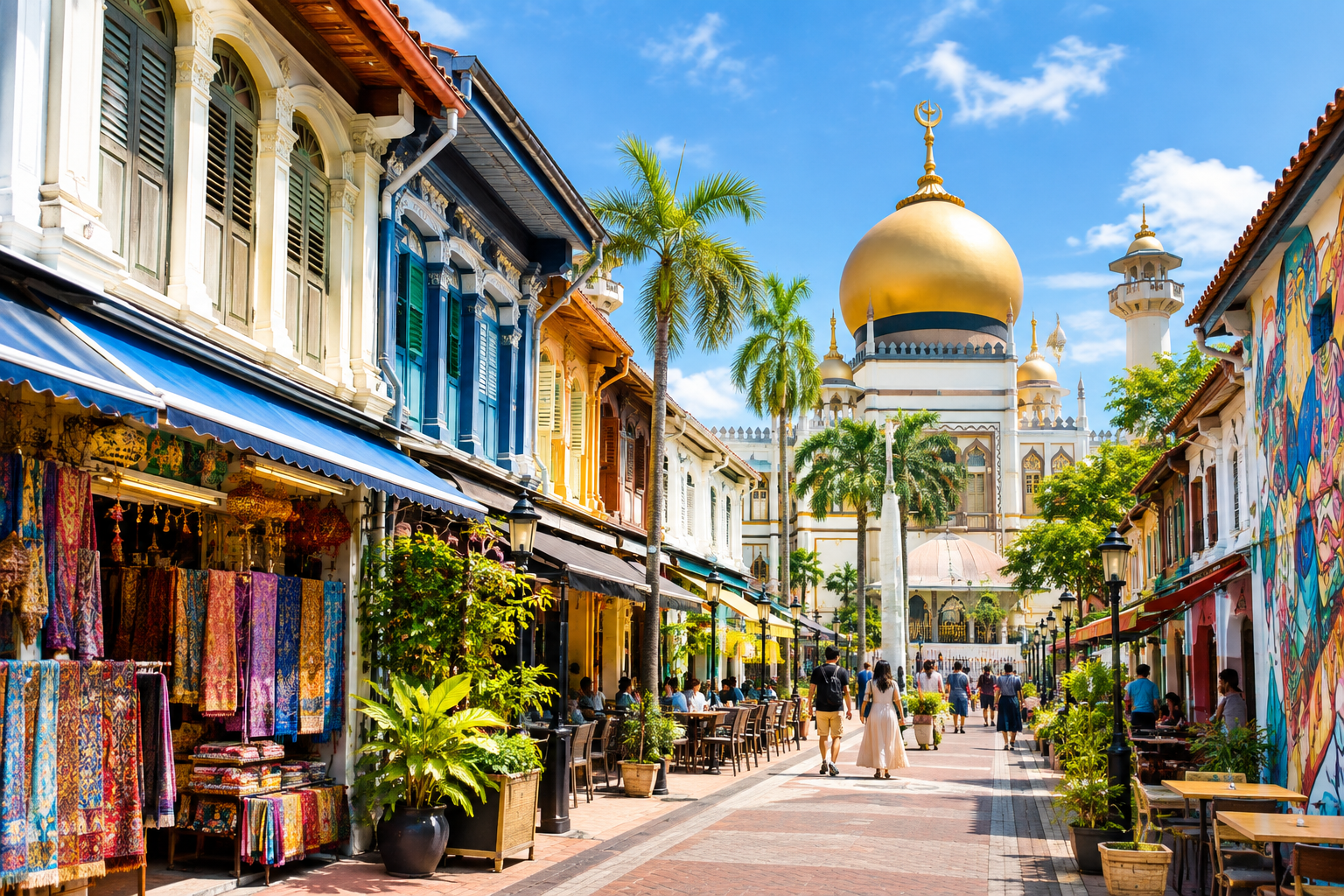
One of the most recognizable landmarks in Kampong Gelam is Sultan Mosque. With its impressive golden domes and grand architecture, the mosque is one of Singapore’s most important religious and historical landmarks.
Sultan Mosque is located along North Bridge Road and close to Bussorah Street. The building attracts worshippers as well as visitors interested in Singapore’s architectural and cultural heritage. Its distinctive golden domes create an iconic visual identity that has become closely associated with Kampong Gelam Singapore.
The mosque has played an important role in the Muslim community for generations. Its presence reflects the historical importance of Kampong Gelam as a center of Islamic culture in Singapore.
Visitors walking around the mosque can also explore the surrounding heritage streets. Restaurants, cafes, shops, and cultural businesses create a lively environment around Sultan Mosque, particularly during evenings and weekends.
For travelers interested in photography, architecture, history, and cultural tourism, Sultan Mosque is an essential stop when visiting Kampong Gelam.
Arab Street and the Traditional Character of Kampong Gelam
Arab Street is another famous destination in Kampong Gelam. Historically associated with textile trading and Middle Eastern communities, Arab Street has become one of Singapore’s most recognizable heritage streets.
The area is known for colorful fabrics, carpets, traditional clothing, handicrafts, restaurants, cafes, and specialty stores. Walking along Arab Street provides visitors with an opportunity to experience a part of Singapore where traditional businesses continue to operate alongside modern lifestyle establishments.
The colorful shopfronts and historic buildings make Arab Street particularly attractive to photographers and travelers who enjoy exploring urban neighborhoods. Many buildings feature traditional architectural details that contrast beautifully with the modern skyline surrounding Kampong Gelam.
Arab Street is also an excellent place to experience the multicultural character of Singapore. Malay, Arab, Indian, and other cultural influences can be seen in the food, architecture, businesses, and daily activities throughout the area.
Bussorah Street and Its Cultural Atmosphere
Bussorah Street runs toward Sultan Mosque and is one of the most pleasant streets to explore in Kampong Gelam. The pedestrian-friendly environment makes it popular with visitors who want to walk, dine, shop, and take photographs.
The street is lined with restaurants, cafes, souvenir shops, traditional stores, and lifestyle businesses. During the day, the atmosphere is relaxed and suitable for sightseeing. In the evening, the area becomes more energetic as restaurants and cafes attract local residents and tourists.
Bussorah Street represents the way Kampong Gelam has transformed over time. Traditional heritage remains visible, while modern businesses have introduced new energy to the neighborhood.
For travelers planning a Kampong Gelam itinerary, Bussorah Street can easily be combined with Sultan Mosque, Arab Street, Haji Lane, and nearby cultural attractions.
Haji Lane: A Modern Side of Kampong Gelam
Haji Lane offers a very different experience from the traditional streets around Sultan Mosque. Famous for its colorful murals, independent boutiques, cafes, bars, and creative businesses, Haji Lane has become one of Singapore’s popular urban lifestyle destinations.
The narrow street is filled with colorful walls and creative artwork, making it especially popular among younger travelers and photography enthusiasts. Independent fashion stores and lifestyle shops give Haji Lane a distinctive character that differs from large commercial shopping districts.
Despite its modern atmosphere, Haji Lane remains part of the larger Kampong Gelam heritage district. This combination of traditional architecture and contemporary creativity demonstrates how Singapore’s historic neighborhoods continue to evolve.
Visitors can spend time exploring the small shops, photographing murals, enjoying coffee, or simply walking through the lane and observing the neighborhood’s unique atmosphere.
Food in Kampong Gelam
Food is one of the most important reasons to visit Kampong Gelam. The district offers a diverse selection of Malay, Indonesian, Middle Eastern, Indian, Turkish, and modern international cuisine.
Visitors can find traditional Malay dishes, nasi padang, satay, biryani, kebabs, hummus, shawarma, grilled meats, pastries, desserts, and many other specialties. The variety of restaurants reflects the multicultural history of Kampong Gelam.
For travelers who want to experience Singaporean food culture, Kampong Gelam provides an opportunity to explore flavors influenced by different communities. Traditional recipes have been passed down through generations, while modern restaurants continue to introduce new interpretations.
Food tourism in Kampong Gelam is not simply about eating. It is also about understanding the cultural connections behind each dish. Many foods found in the district reflect the movement of people, traditions, and trade across Southeast Asia and beyond.
Malay Heritage and Cultural Identity
Kampong Gelam has a particularly strong connection with Malay heritage in Singapore. The neighborhood has historically been an important center for Malay communities, and elements of this heritage remain visible today.
Traditional clothing stores, Malay restaurants, cultural events, music, architecture, and religious institutions all contribute to the district’s cultural identity.
The Malay Heritage Centre, located near Sultan Mosque, has also played an important role in presenting the history and culture of the Malay community in Singapore. Through exhibitions and educational programs, visitors can learn about the historical development of Malay communities and their contribution to Singapore.
Exploring Kampong Gelam with an interest in Malay heritage provides a deeper experience than simply visiting the area’s tourist attractions. It allows travelers to understand how communities helped shape Singapore’s identity.
The Malay Heritage Centre
The Malay Heritage Centre is an important cultural destination in Kampong Gelam. Located within the historic Kampong Gelam area, the center has traditionally served as a place where visitors can learn about Malay history, culture, and heritage.
The surrounding area itself is historically significant, with connections to the former Malay royalty and the development of the neighborhood.
For visitors interested in Singapore history, the Malay Heritage Centre area offers useful context for understanding Kampong Gelam. The exhibitions and heritage surroundings help explain how the district developed from a historical settlement into one of Singapore’s best-known cultural neighborhoods.
Travelers can combine a visit to the heritage center area with Sultan Mosque, Bussorah Street, Arab Street, and Haji Lane to create a comprehensive cultural walking tour.
Shopping in Kampong Gelam
Shopping in Kampong Gelam is different from shopping in Singapore’s major malls. Instead of large international brands, visitors can discover independent stores, traditional textile businesses, fashion boutiques, souvenir shops, handicraft stores, and specialty retailers.
Arab Street is particularly well known for textiles and traditional fabrics. Visitors may find colorful materials, scarves, traditional clothing, carpets, and decorative items.
Haji Lane offers a more contemporary shopping experience, with independent fashion and lifestyle stores. Many shops focus on unique products that are not commonly found in large shopping centers.
This combination of traditional and contemporary shopping makes Kampong Gelam attractive to travelers who enjoy discovering distinctive products and supporting small businesses.
Street Art and Photography in Kampong Gelam
Kampong Gelam is one of Singapore’s interesting destinations for street photography. The combination of heritage buildings, colorful murals, traditional shops, modern cafes, and historic landmarks creates many opportunities for photography.
Haji Lane is particularly famous for its murals and colorful walls. However, photographers can also discover interesting architectural details throughout Arab Street and the surrounding streets.
Early morning can provide a quieter atmosphere for photography, while the afternoon offers stronger natural light. Evening visits create a different mood, with restaurants, cafes, and businesses bringing more activity to the streets.
For social media travelers, Kampong Gelam provides many visually appealing locations. However, the neighborhood is more than a collection of photographic backgrounds. The people, businesses, architecture, and traditions are what give the area its character.
Kampong Gelam at Night
Kampong Gelam changes significantly after sunset. During the evening, restaurants begin filling with customers, cafes become more active, and the streets develop a lively atmosphere.
Visitors can enjoy dinner at a Malay, Middle Eastern, Indian, or international restaurant before walking through the surrounding heritage streets.
Haji Lane is particularly popular at night because of its cafes, bars, music, and creative atmosphere. Meanwhile, the area around Sultan Mosque offers a more traditional and cultural experience.
For tourists staying in central Singapore, Kampong Gelam is an accessible evening destination. Its combination of food, culture, architecture, and entertainment makes it suitable for travelers with different interests.
Why Kampong Gelam Is Important to Singapore
Kampong Gelam represents an important part of Singapore’s multicultural history. Singapore is internationally known as a multicultural society, and Kampong Gelam provides a clear example of how different cultural influences have shaped the city.
Malay, Arab, Indian, Islamic, and Southeast Asian traditions can be experienced within a relatively compact area. The neighborhood demonstrates how heritage can remain relevant while adapting to modern urban life.
The preservation of historic buildings and cultural landmarks is particularly important because rapid urban development can change traditional neighborhoods quickly. Kampong Gelam shows how heritage and modernization can exist side by side.
For tourists, this makes Kampong Gelam more than just another sightseeing location. It is a place where Singapore’s past and present can be experienced within the same streets.
How to Get to Kampong Gelam
Kampong Gelam is conveniently located in central Singapore and can be reached using public transportation. Several MRT stations are located within walking distance of the district, making it easy for visitors staying in other parts of Singapore to reach the area.
Nicoll Highway MRT, Bugis MRT, and Lavender MRT are among the stations that can be used depending on the visitor’s starting point and destination within Kampong Gelam.
Public buses also serve roads around the district. Singapore’s efficient public transportation system makes Kampong Gelam relatively easy to include in a city sightseeing itinerary.
Travelers can also walk from nearby attractions such as Bugis, Little India, and the Civic District, depending on their schedule and walking preferences.
Best Time to Visit Kampong Gelam
Kampong Gelam can be visited throughout the year, but the best time depends on the traveler’s interests.
Morning is suitable for travelers who prefer quieter streets and photography. The area is generally calmer before the main tourist and dining crowds arrive.
Afternoon is ideal for shopping, sightseeing, visiting heritage attractions, and exploring the neighborhood’s architecture.
Evening is popular for food and entertainment. Restaurants and cafes become more active, and the atmosphere around Haji Lane and other streets becomes livelier.
Visitors should also consider Singapore’s tropical climate. The weather can be hot and humid, and rain can occur throughout the year. Comfortable clothing, drinking water, and suitable footwear can make a walking tour more enjoyable.
Kampong Gelam for Families
Kampong Gelam can be an interesting destination for families who want to introduce children to Singapore’s multicultural heritage.
The area provides opportunities to see historic buildings, learn about different cultures, taste different foods, and explore colorful streets.
Parents can use the visit as an informal educational experience. Children can learn that a modern city can contain many layers of history and cultural identity.
Families may prefer visiting during the daytime when the streets are generally more suitable for relaxed sightseeing. Combining the area with nearby Bugis attractions can also create a convenient full-day itinerary.
Kampong Gelam for International Tourists
International tourists often visit Kampong Gelam because it provides a different perspective on Singapore. The city is famous for modern architecture, luxury shopping, business districts, and advanced infrastructure, but Kampong Gelam reveals another side of the country.
Travelers can see historic shophouses, traditional businesses, religious architecture, and multicultural restaurants within a relatively small area.
For first-time visitors to Singapore, Kampong Gelam can help create a more balanced travel experience. Instead of focusing exclusively on modern attractions, visitors can explore the historical communities that contributed to the development of the city.
Kampong Gelam and Singapore’s Multicultural Experience
One of the strongest qualities of Kampong Gelam is its ability to bring different cultures together.
A short walk through the district can reveal Malay traditions, Middle Eastern influences, Indian cuisine, Islamic architecture, modern Singaporean lifestyle businesses, and international tourism.
This multicultural environment is part of what makes Singapore unique. Kampong Gelam offers visitors the opportunity to experience cultural diversity through everyday places such as restaurants, shops, religious buildings, and streets.
Rather than presenting culture only inside museums, Kampong Gelam allows visitors to experience it through ordinary urban life.
A Suggested Kampong Gelam Walking Route
A simple Kampong Gelam walking tour can begin near Sultan Mosque. From there, visitors can explore Bussorah Street and continue toward Arab Street.
After exploring the traditional textile shops and restaurants, travelers can walk toward Haji Lane to experience the district’s modern creative side.
Visitors can then explore nearby streets, stop for coffee or lunch, and return toward the Sultan Mosque area for dinner.
A walking tour can take several hours depending on how much time is spent shopping, eating, taking photographs, and visiting cultural attractions.
The advantage of exploring Kampong Gelam on foot is that visitors can discover small details that might be missed when traveling by vehicle.
Things to Remember When Visiting Kampong Gelam
Because Kampong Gelam contains important religious and cultural sites, visitors should behave respectfully.
When visiting or walking near religious buildings, appropriate clothing and respectful behavior are recommended. Travelers should also be aware that some locations may have specific rules for photography or entry.
Supporting local businesses is another meaningful way to experience the neighborhood. Instead of simply taking photographs, visitors can enjoy local food, purchase traditional products, and spend time learning about the area’s history.
Respect for residents and local communities is especially important because Kampong Gelam is not simply a tourist attraction. It is also a living neighborhood where people work, worship, shop, dine, and live.
Kampong Gelam as a Heritage Destination
Kampong Gelam has become one of Singapore’s most recognizable heritage destinations because it combines historical importance with contemporary urban culture.
Its streets tell stories about migration, trade, religion, family, community, and Singapore’s development as a global city.
The preservation of heritage buildings gives visitors a visual connection to the past. Meanwhile, new businesses and creative spaces ensure that the neighborhood continues to evolve.
This balance between heritage and modernity is one of the most compelling aspects of Kampong Gelam Singapore.
Why Travelers Should Explore Kampong Gelam
There are many reasons to include Kampong Gelam in a Singapore travel itinerary. History lovers can explore heritage landmarks. Food lovers can discover Malay and Middle Eastern cuisine. Photographers can find colorful streets and murals. Shoppers can explore traditional textile stores and independent boutiques.
Families can learn about Singapore’s multicultural heritage, while younger travelers can enjoy the creative atmosphere of Haji Lane.
Most importantly, Kampong Gelam gives visitors an opportunity to slow down and experience Singapore at street level. Instead of simply moving between famous landmarks, travelers can walk through the neighborhood, observe daily life, talk with local businesses, and discover the stories behind the buildings.
Final Thoughts on Kampong Gelam Singapore
Kampong Gelam is a destination where history, culture, food, architecture, shopping, and modern creativity come together. From the iconic Sultan Mosque and traditional Arab Street to the colorful atmosphere of Haji Lane, every part of the district offers a different perspective on Singapore.
The neighborhood’s importance comes not only from its famous landmarks but also from the communities and traditions that have shaped it over generations.
For anyone searching for things to do in Singapore, cultural attractions in Singapore, historical places in Singapore, or unique neighborhoods to explore, Kampong Gelam deserves a place on the itinerary.
A visit to Kampong Gelam is ultimately more than sightseeing. It is an opportunity to understand how Singapore’s multicultural identity developed and how heritage continues to live within a modern city.
Whether you are visiting Singapore for the first time or returning to discover something new, Kampong Gelam offers an experience that combines the warmth of a historic neighborhood with the energy of contemporary Singapore.
From traditional Malay heritage and Islamic architecture to modern street art, independent boutiques, international cuisine, and lively nightlife, Kampong Gelam remains one of the most distinctive cultural destinations in Singapore.
For travelers who want to see beyond the famous skyline and shopping districts, Kampong Gelam provides a human, colorful, and memorable side of Singapore that is best discovered slowly, one street at a time.